Filter
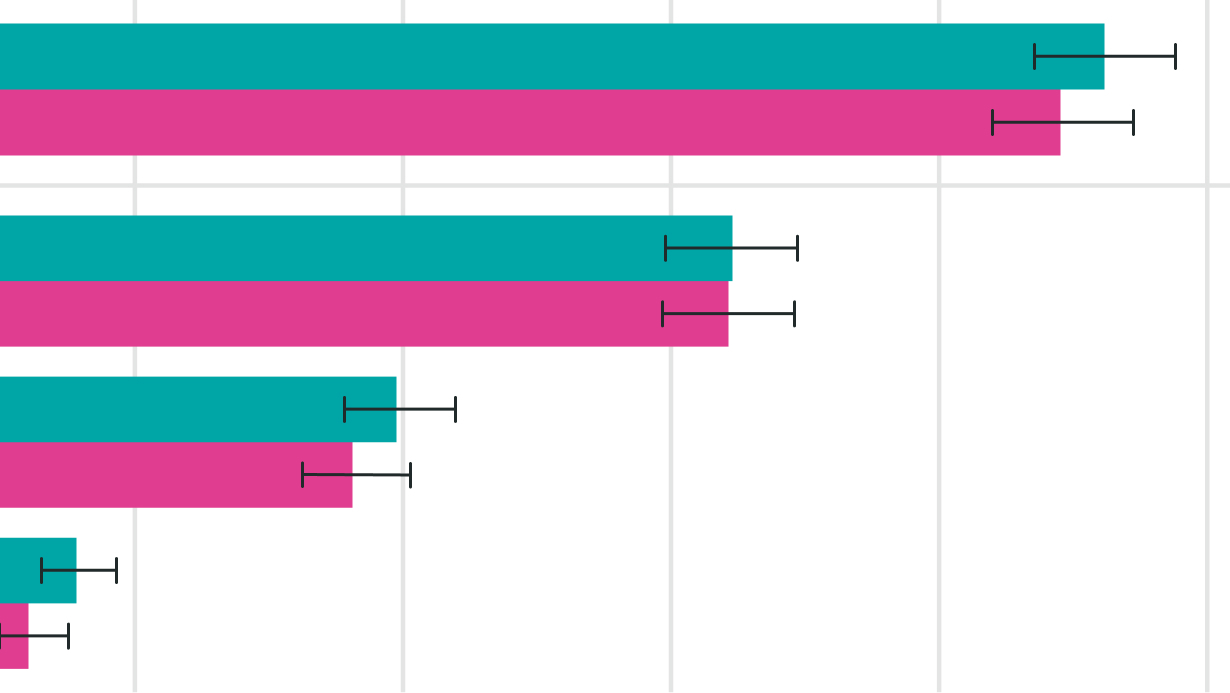
June and September polls from Epoch AI/Ipsos show no detectable increase in the share of US adults experiencing cyber incidents
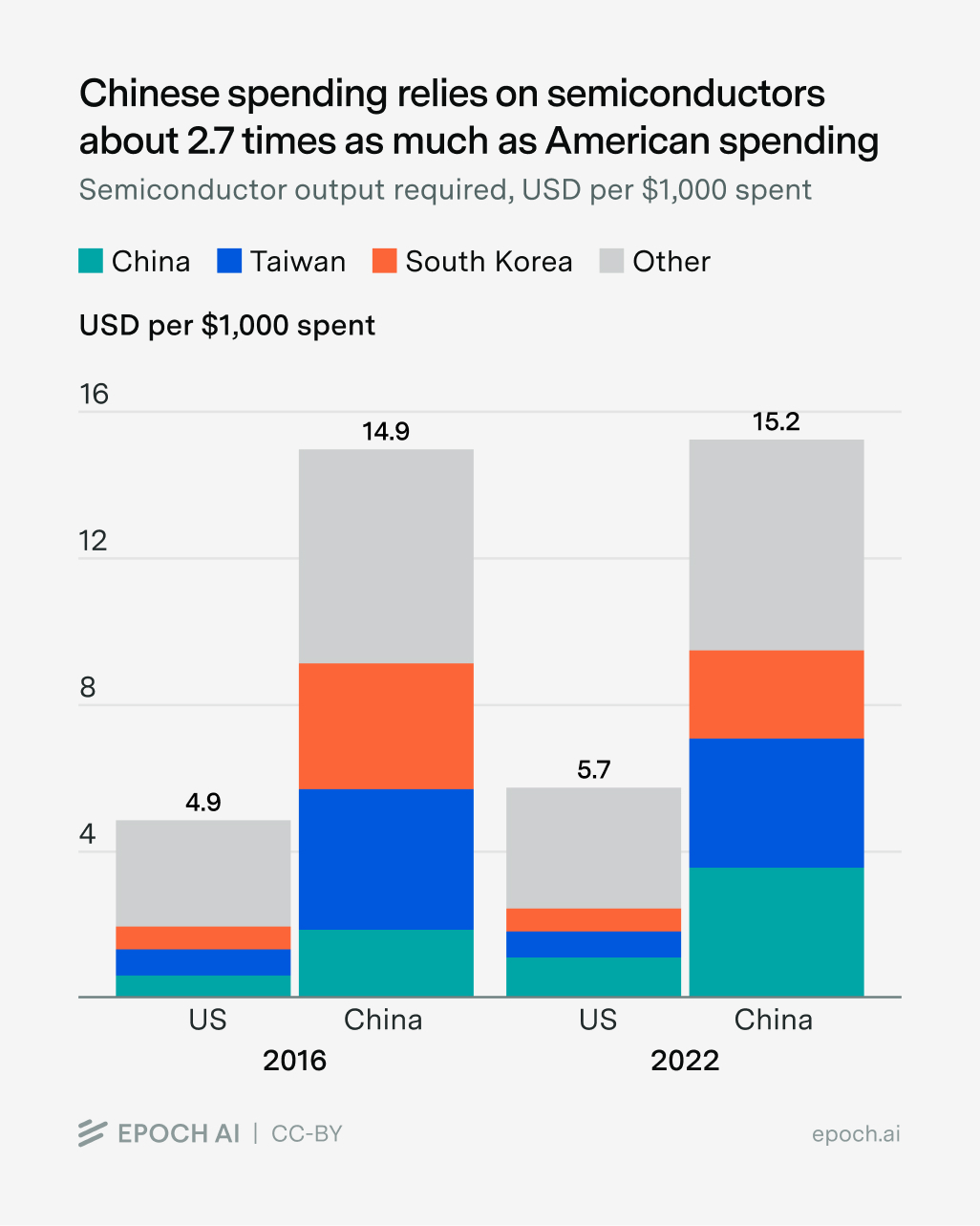
China is 2.7× as exposed to semiconductor supply shocks as the US, Epoch AI estimates. Epoch traces chips through input-output tables to model the impact of a Taiwan shock and decoupling.
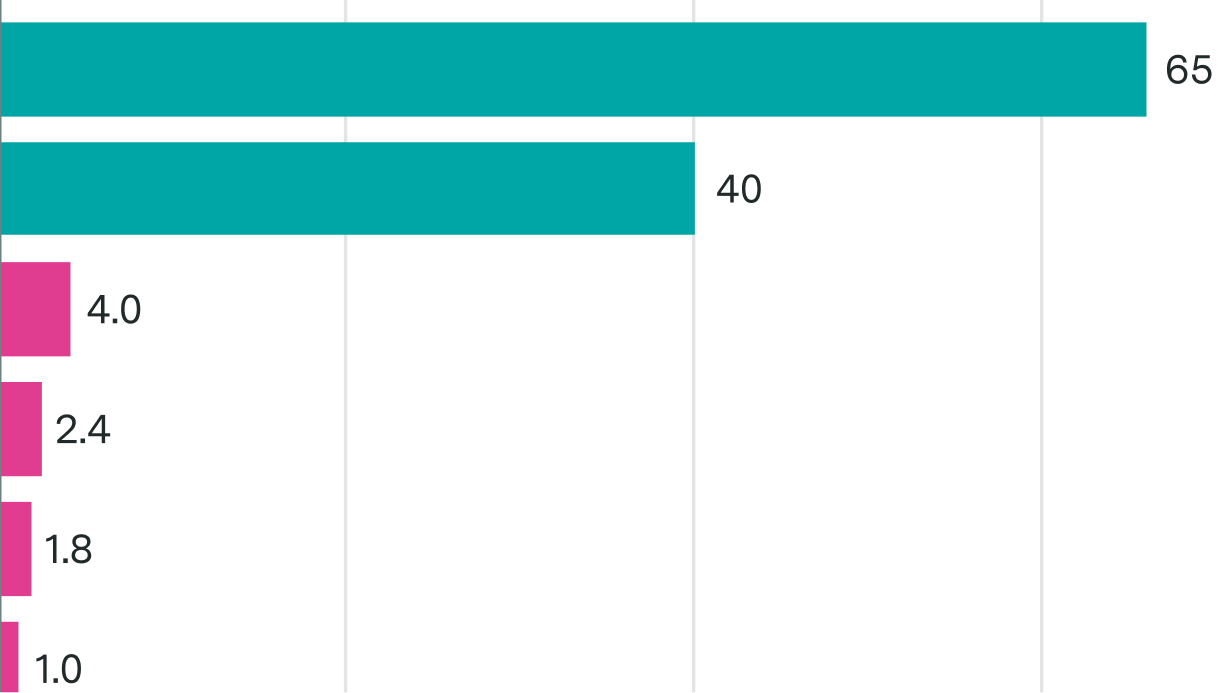
China's six leading AI firms earn about 10% of OpenAI and Anthropic's combined AI revenue. Epoch AI examines their five revenue streams: consumer apps, model access, enterprise and government solutions, licensing fees, and indirect monetization through cloud and advertising.
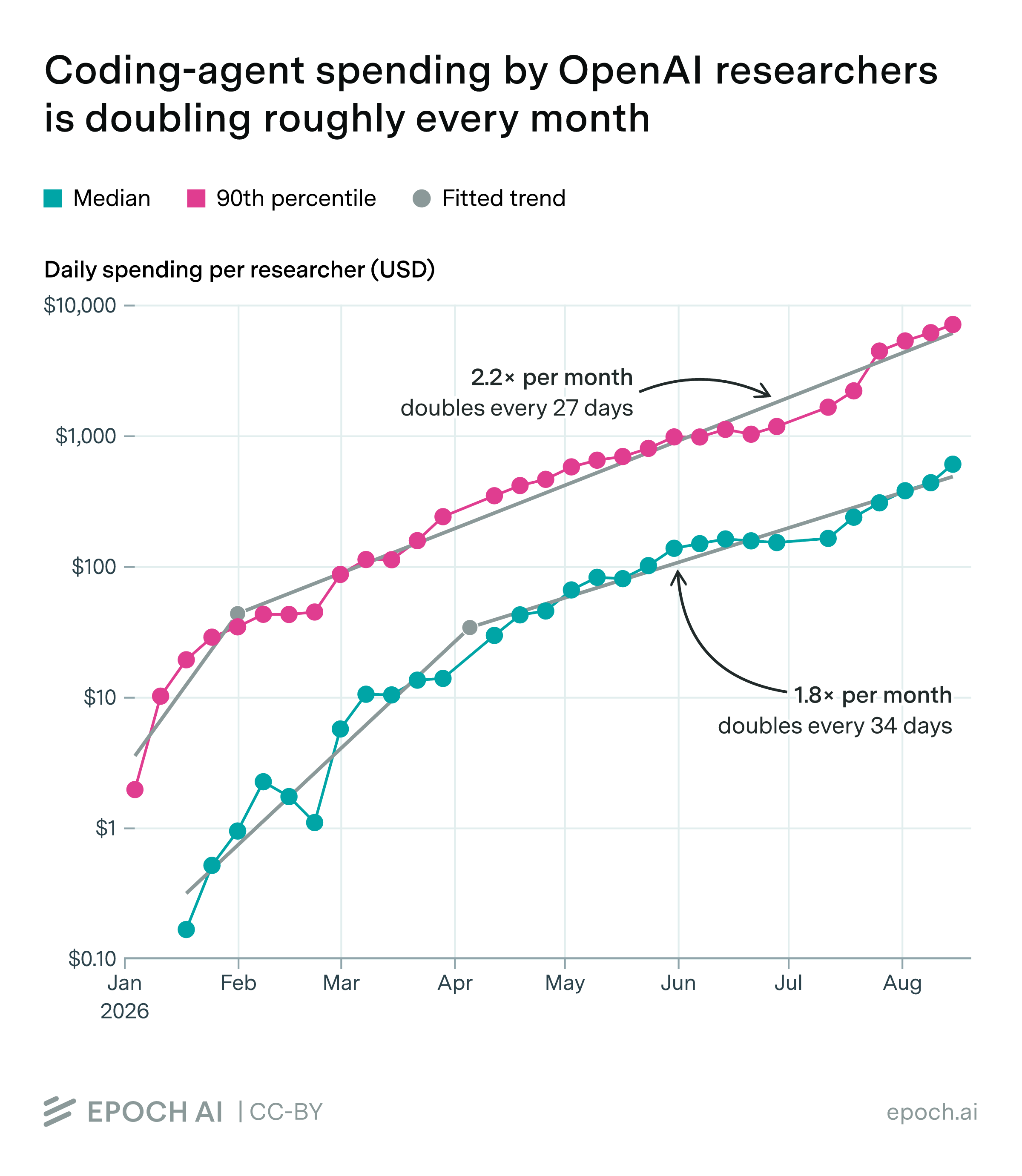
OpenAI researchers’ coding-agent usage, valued at API prices, has recently been doubling roughly every month, according to breakpoint fits.
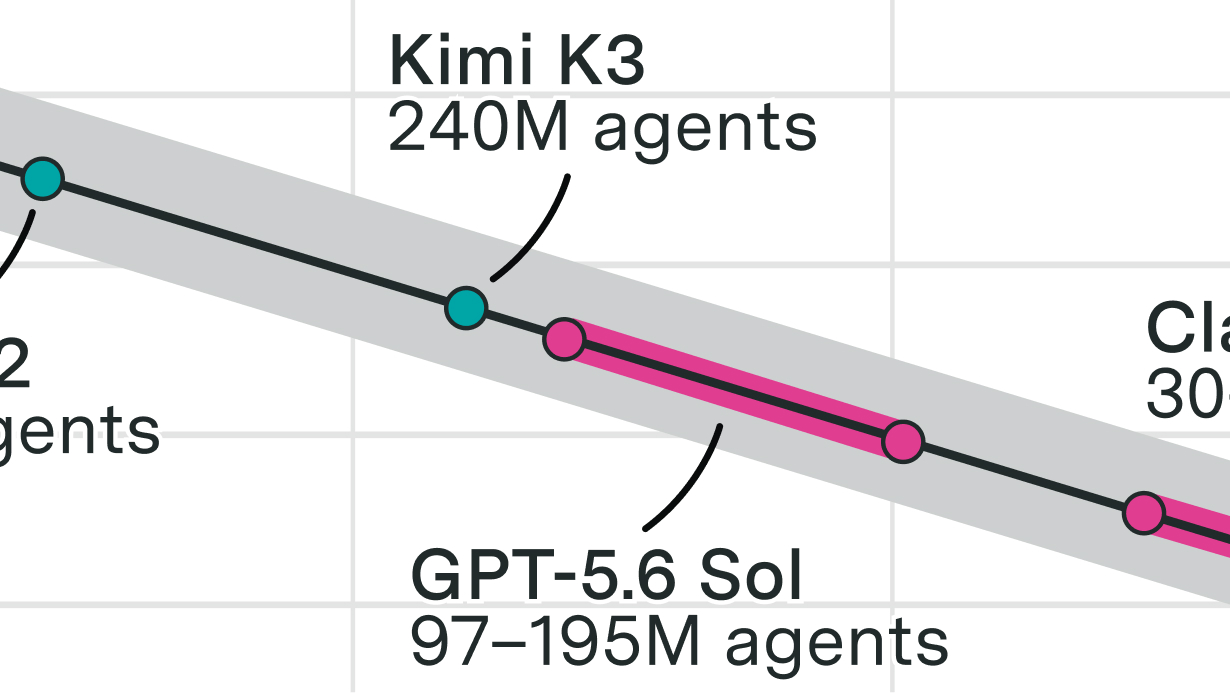
Memory shipped through 2027 could run 33–171 million concurrent frontier-model agents, or billions using efficient open models. Epoch AI estimates inference capacity from HBM supply, serving benchmarks, and agent-hour costs.
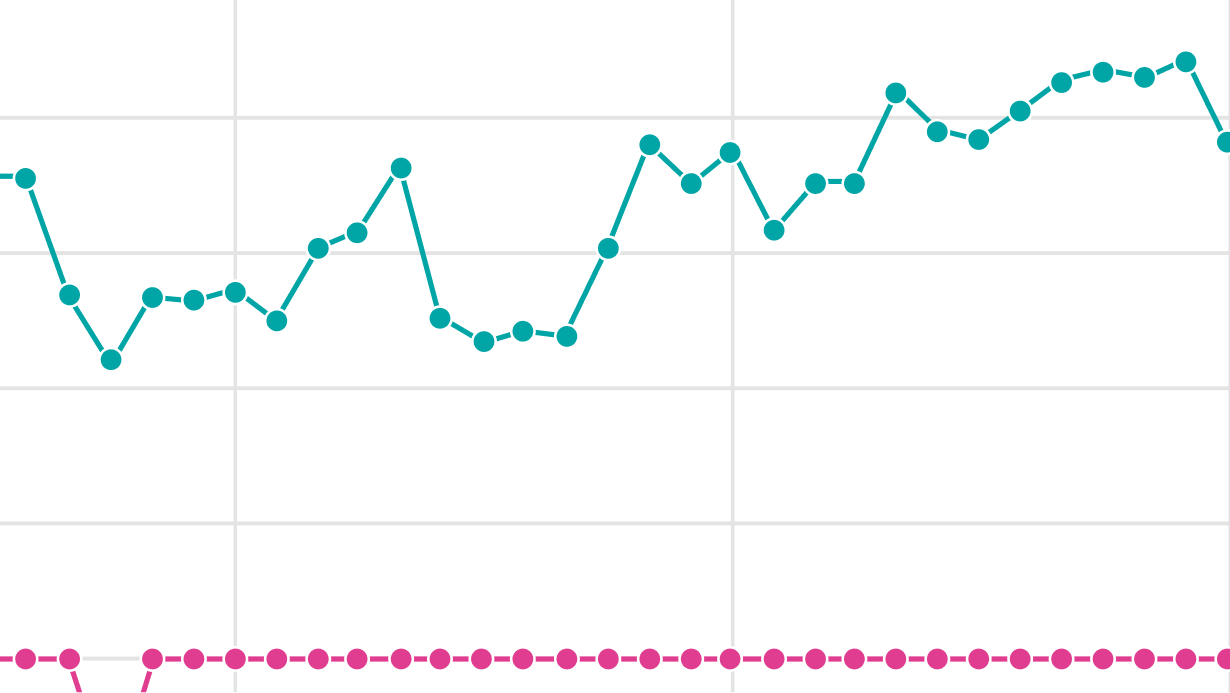
Median monthly messages per active user rose from 14 in 2023 to 36 in 2025, and the top 10% of users sent 63% of all prompts. Epoch AI's ChatGPT usage explorer draws on 8.3 million messages from 5,000 US YouGov panelists.
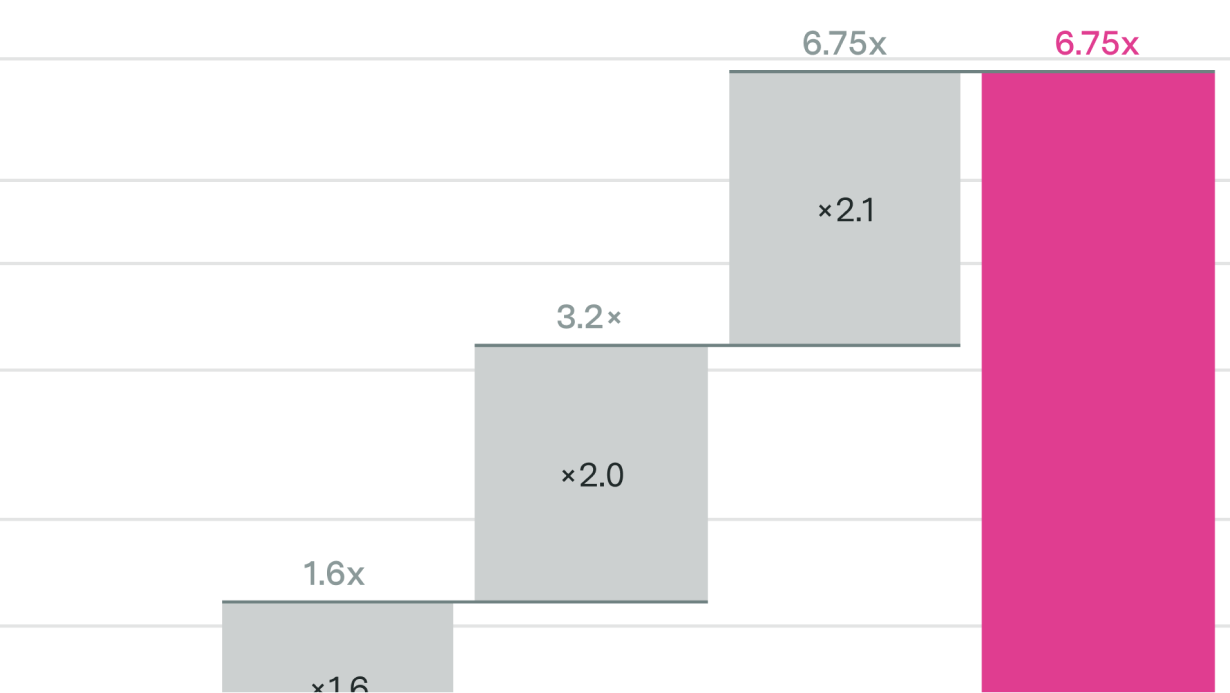
Huawei plans major gains in AI chip performance by 2030, but US export controls cap its most important scaling levers. Epoch AI estimates Huawei will produce less than 4% as much AI compute as Nvidia in 2026, a share that could be around 1% by 2028 without access to foreign memory.
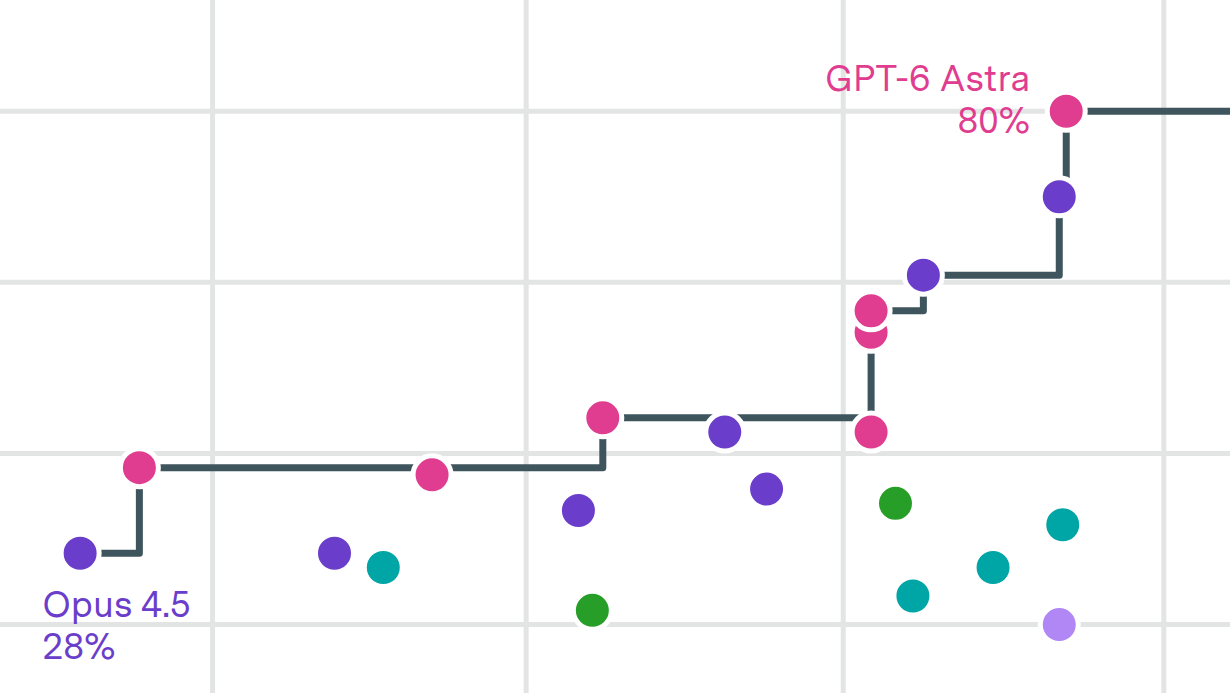
AI model scores on Epoch AI's IKEA furniture assembly benchmark jumped from 28% to 80% in 10 months, with open-weight models trailing closed-weight models by about 7 months. Epoch AI's test of visual and spatial reasoning across 60 photos from three furniture builds.
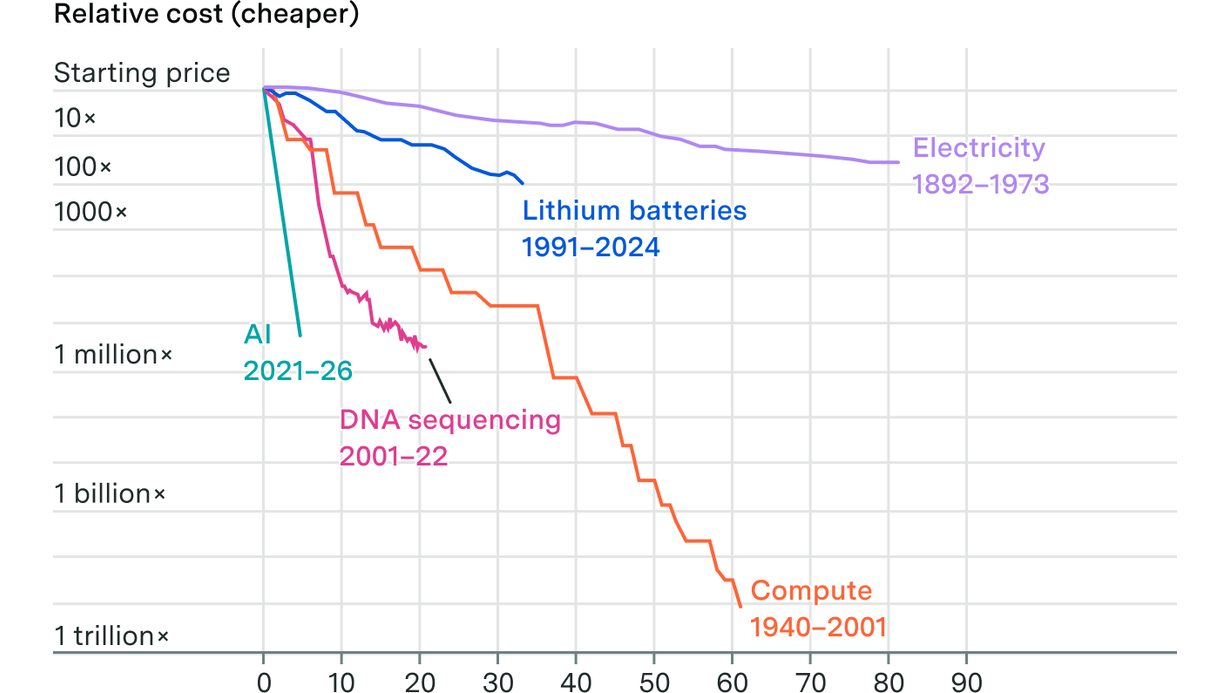
Epoch AI measures how fast the cost of a given level of AI performance is falling across five benchmarks covering math, science and games of skill: about 47% per quarter, or 13x per year, since 2023, faster than electricity, compute, batteries or DNA sequencing ever fell.
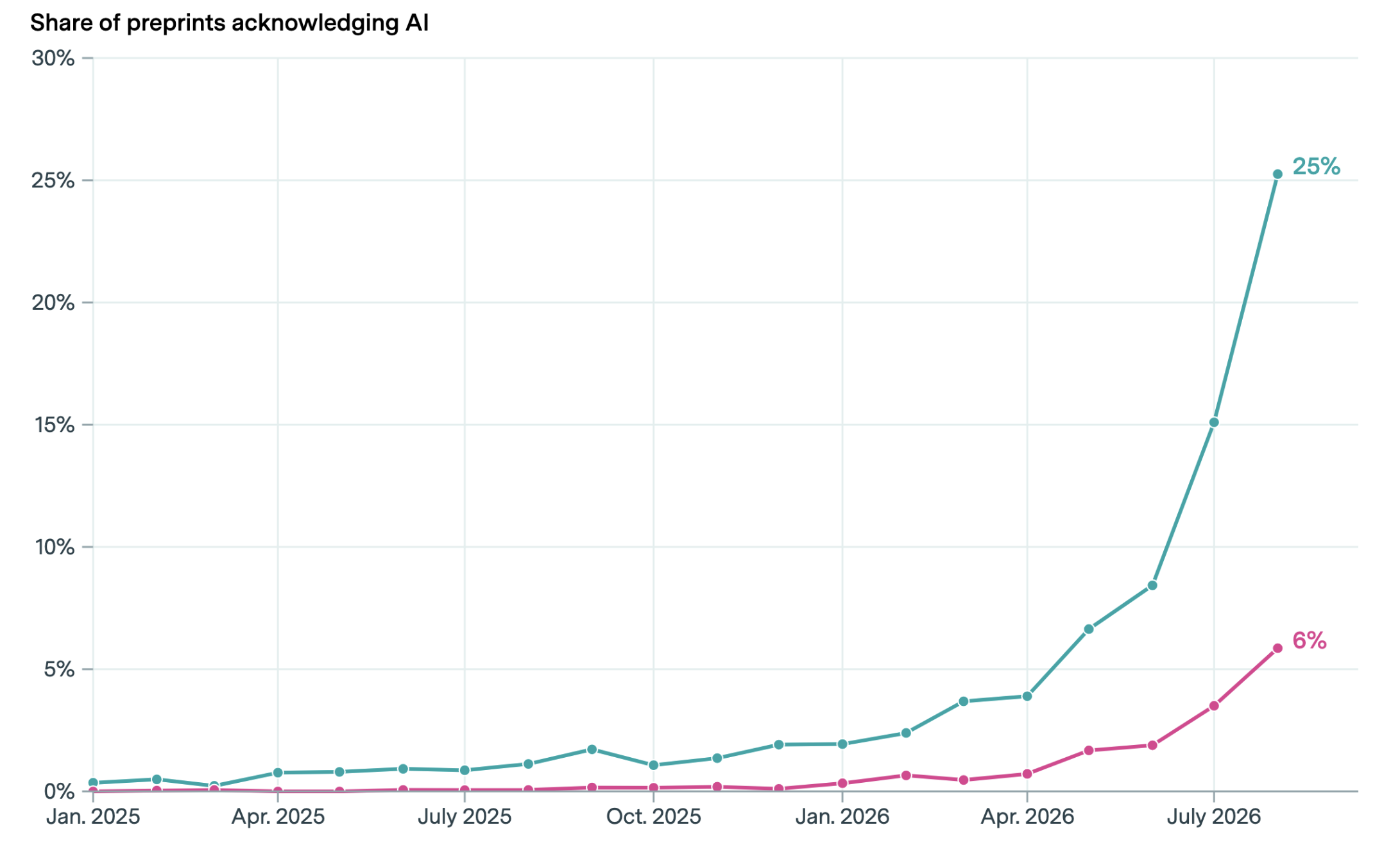
Acknowledgments of AI use in arXiv math preprints rose from 4% in April 2026 to 25% in August, with 6% crediting AI with a substantial research contribution.