AI scaling

The story of AI progress is dominated by scale. Training AI systems with more compute, power and data has consistently led to better performance. Epoch tracks the scale-up of the resources used to train AI systems, and what this means for capabilities and the future of AI. Epoch's research covers training compute trends, data availability, scaling laws, hardware constraints, and the question of whether scaling can continue through the end of the decade.

Filter

Type
0 results
How Fast Could Robot Production Scale Up?
Report
Apr. 22, 2026
How Fast Could Robot Production Scale Up?

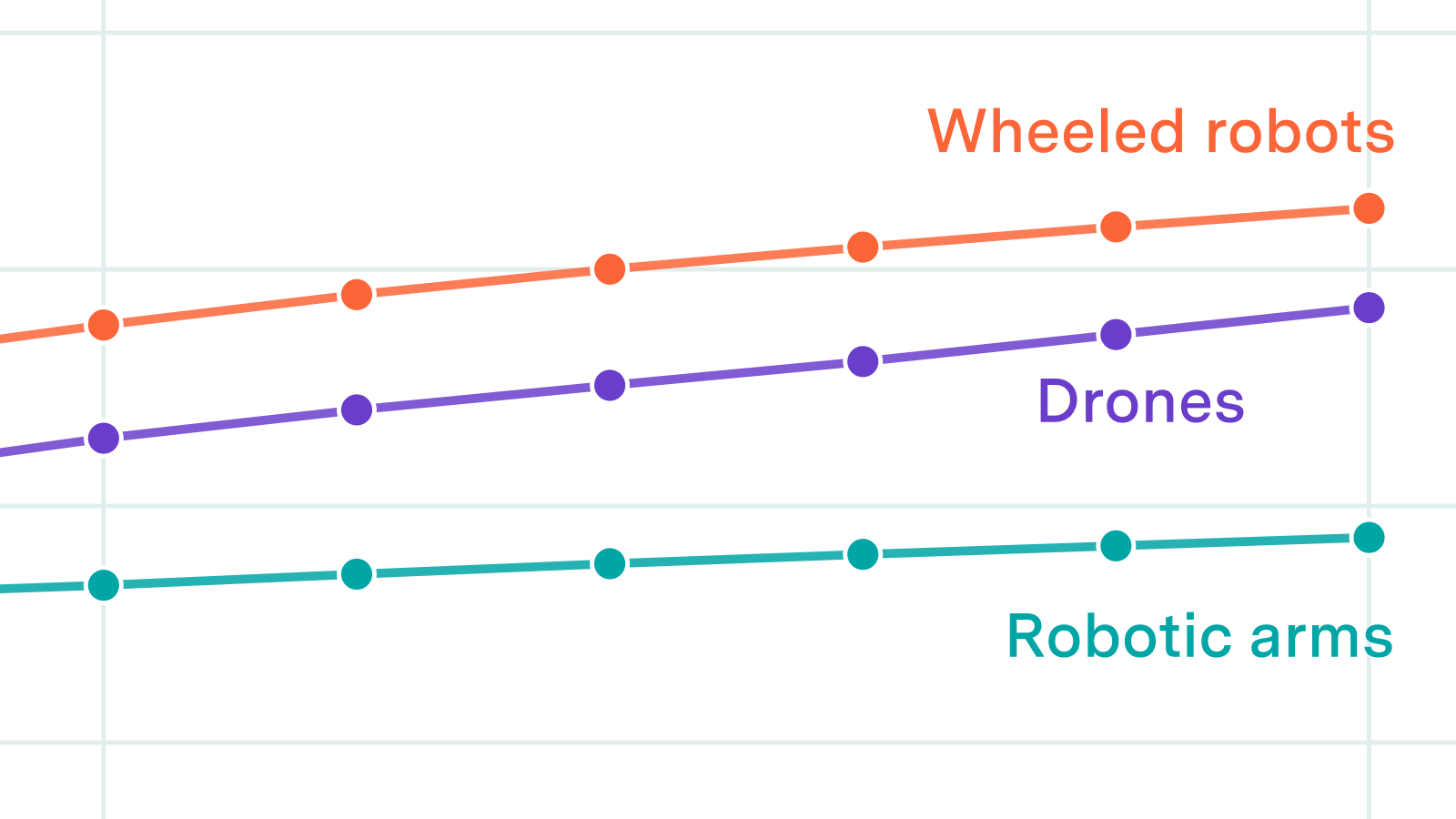
We look at reference classes, factory buildout timelines, and upstream component supply to estimate plausible production rates for humanoids, quadrupeds, robotic arms, wheeled robots, and drones.
By Jean-Stanislas Denain and Yann Rivière

Final training runs account for a minority of R&D compute spending
Newsletter
Mar. 23, 2026
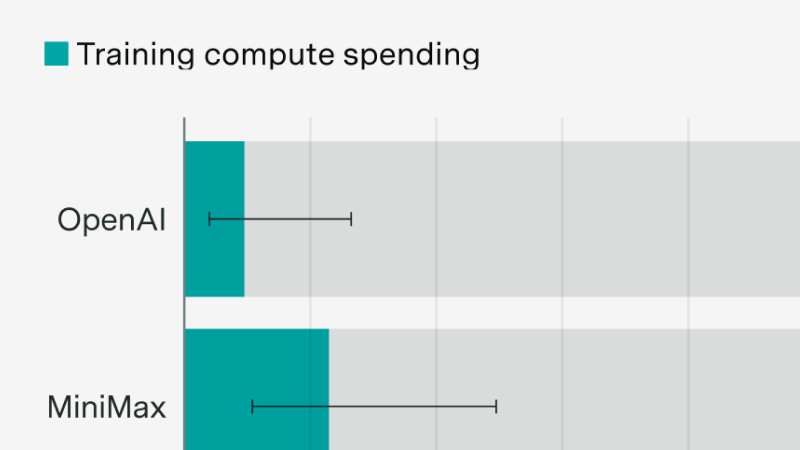
Final training runs account for a minority of R&D compute spending

New evidence following the MiniMax and Z.ai IPOs
By Jean-Stanislas Denain and Cheryl Wu

The least understood driver of AI progress
Newsletter
Feb. 25, 2026
The least understood driver of AI progress

An opinionated guide to “algorithmic progress” and why it matters
By Anson Ho

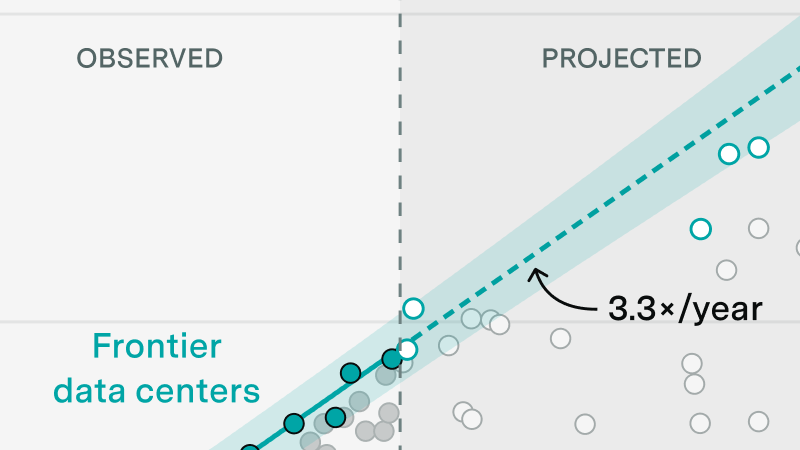
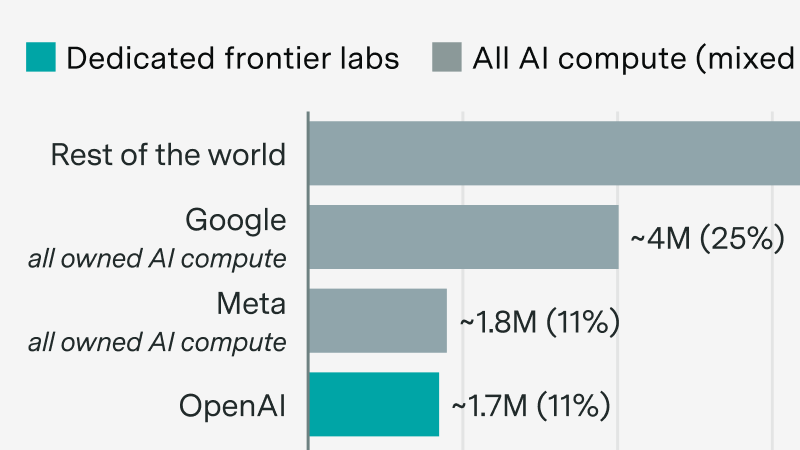
Global AI computing capacity is doubling every 7 months
Data Insight
Jan. 9, 2026
Global AI computing capacity is doubling every 7 months

By Josh You, Venkat Somala, Yafah Edelman, and Luke Emberson

How far can decentralized training over the internet scale?
Newsletter
Dec. 29, 2025
How far can decentralized training over the internet scale?

Decentralized training over the internet promises to scale training to the limits of the internet.

By Jaime Sevilla

Today’s largest data center can do more than 20 GPT-4-scale training runs each month
Data Insight
Dec. 4, 2025
Today’s largest data center can do more than 20 GPT-4-scale training runs each month

By Jaeho Lee

The software intelligence explosion debate needs experiments
Newsletter
Nov. 14, 2025
The software intelligence explosion debate needs experiments

The existing debate rests on data and assumptions that are shakier than most people realize. To make progress, we need better evidence, and experiments are the best way to get it on the margin.

By Anson Ho and Parker Whitfill

Why GPT-5 used less training compute than GPT-4.5 (but GPT-6 probably won’t)
Newsletter
Sep. 26, 2025
Why GPT-5 used less training compute than GPT-4.5 (but GPT-6 probably won’t)

OpenAI focused on scaling post-training on a smaller model

By Yafah Edelman, Jean-Stanislas Denain, Jaime Sevilla, and Anson Ho

Newsletter
Sep. 19, 2025
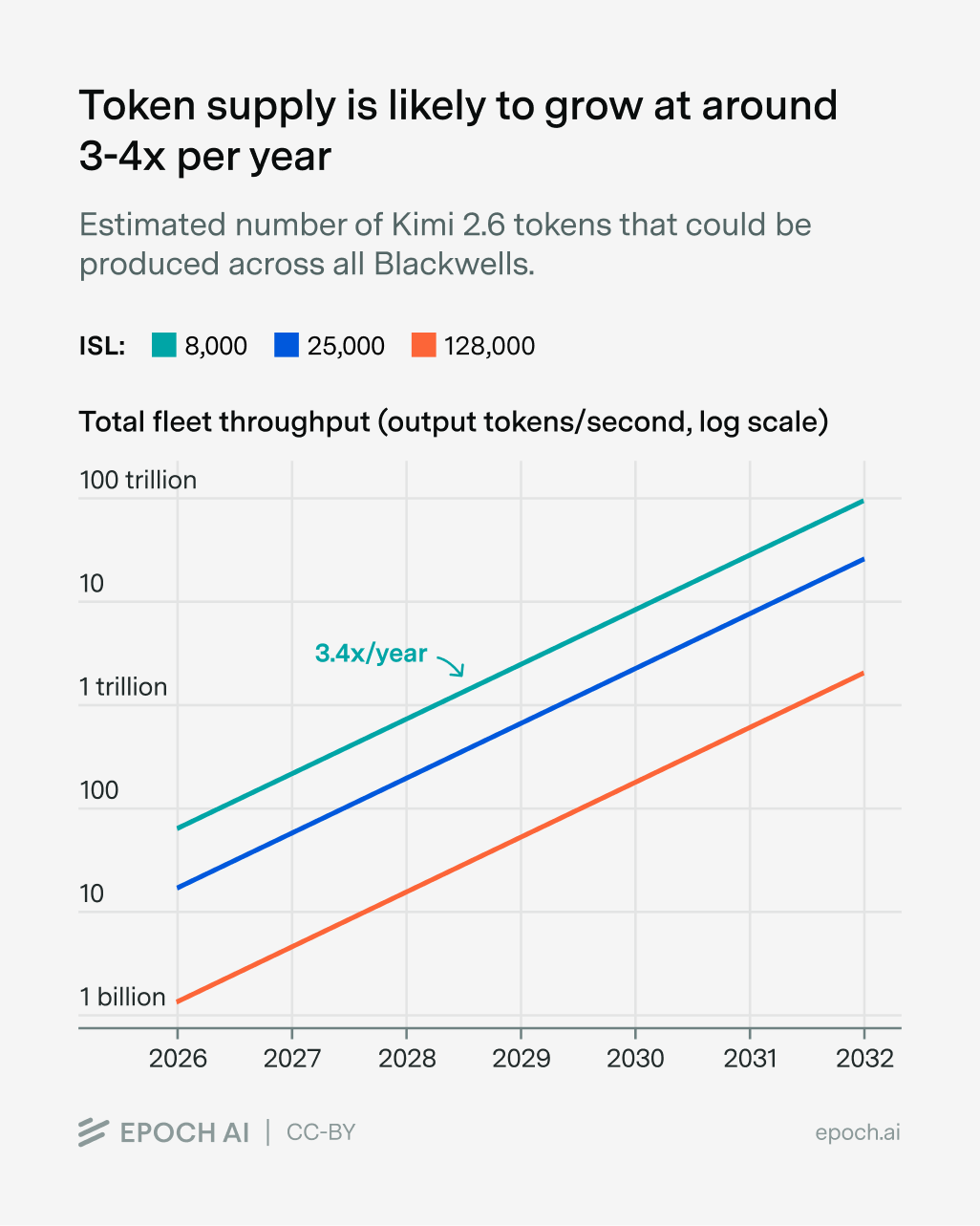
The huge potential implications of long-context inference

Continual learning, scaling RL, and research feedback loops

By Jean-Stanislas Denain and Anson Ho

What will AI look like in 2030?
Report
Sep. 16, 2025
What will AI look like in 2030?

If scaling persists to 2030, AI investments will reach hundreds of billions of dollars and require gigawatts of power. Benchmarks suggest AI could improve productivity in valuable areas such as scientific R&D.

By David Owen

What did it take to train Grok 4?
Data Insight
Sep. 12, 2025
What did it take to train Grok 4?

By James Sanders, Luke Emberson, and Yafah Edelman

Three challenges facing compute-based AI policies
Newsletter
Sep. 11, 2025
Three challenges facing compute-based AI policies

'Training compute' is constantly evolving, and compute-based AI policies must adapt to remain relevant

By Venkat Somala, Anson Ho, and Séb Krier

Compute scaling will slow down due to increasing lead times
Newsletter
Sep. 5, 2025
Compute scaling will slow down due to increasing lead times

A heavily underappreciated dynamic when thinking about AI timelines.

By Yafah Edelman and Anson Ho

Forecasting AI progress until 2040
Podcast
Sep. 4, 2025
Forecasting AI progress until 2040

Epoch AI researchers Jaime Sevilla and Yafah Edelman forecast AI progress to 2040: coding automation, 10% GDP growth, and wild uncertainty after 2035.

By Jaime Sevilla and Yafah Edelman

How much power will frontier AI training demand in 2030?
Paper
Aug. 11, 2025
How much power will frontier AI training demand in 2030?

The power required to train the largest frontier models is growing by more than 2x per year, and is on trend to reaching multiple gigawatts by 2030.

By Josh You and David Owen

Compute is not a bottleneck for robotic manipulation
Data Insight
Aug. 8, 2025
Compute is not a bottleneck for robotic manipulation

By Ben Cottier, Scott Longwell, James Sanders, David Owen, Yafah Edelman, and Luke Emberson

Training open-weight models is becoming more data intensive
Data Insight
Aug. 1, 2025
Training open-weight models is becoming more data intensive

By Venkat Somala and Yafah Edelman

Newsletter
Jul. 26, 2025
Why China isn’t about to leap ahead of the West on compute

Chinese hardware is closing the gap, but major bottlenecks remain

By Veronika Blablová and Robi Rahman

Frontier training runs will likely stop getting longer by around 2027
Data Insight
Jul. 25, 2025
Frontier training runs will likely stop getting longer by around 2027

By Luke Emberson and Yafah Edelman

Newsletter
Jul. 2, 2025
How big could an “AI Manhattan Project” get?

An AI Manhattan Project could accelerate compute scaling by two years.

By Arden Berg and Anson Ho

Newsletter
Jun. 20, 2025
AI and explosive growth redux

GATE model shows AI-driven growth surges more easily than expected and supports much larger investments—advocating moderate optimism.

By Andrei Potlogea and Anson Ho

Inference economics of language models
Paper
Jun. 17, 2025
Inference economics of language models

We investigate how speed trades off against cost in language model inference. We find that inference latency scales with the square root of model size and the cube root of memory bandwidth, and other results.

By Ege Erdil

How many AI models will exceed compute thresholds?
Report
May 30, 2025
How many AI models will exceed compute thresholds?

We project how many notable AI models will exceed training compute thresholds, with results accessible in an interactive tool. Model counts rapidly increase from 10 above 1e26 FLOP by 2026, to over 200 by 2030.

By Ben Cottier and David Owen

Newsletter
May 16, 2025
How fast can algorithms advance capabilities?

This week's issue is a guest post by Henry Josephson, who is a research manager at UChicago's XLab and an AI governance intern at Google DeepMind.

By Henry Josephson

Newsletter
May 9, 2025
How far can reasoning models scale?

Available evidence suggests that rapid growth in reasoning training can continue for a year or so.

By Josh You

The computational performance of leading AI supercomputers has doubled every nine months
Data Insight
Updated Jun. 5, 2025
The computational performance of leading AI supercomputers has doubled every nine months

By Konstantin F. Pilz, Robi Rahman, James Sanders, Luke Emberson, and Lennart Heim

Newsletter
Apr. 26, 2025
The case for multi-decade AI timelines

In this Gradient Updates weekly issue, Ege discusses the case for multi-decade AI timelines.

By Ege Erdil

Trends in AI supercomputers
Paper
Apr. 23, 2025
Trends in AI supercomputers

AI supercomputers double in performance every 9 months, cost billions of dollars, and require as much power as mid-sized cities. Companies now own 80% of all AI supercomputers, while governments’ share has declined.

By Konstantin F. Pilz, Robi Rahman, James Sanders, and Lennart Heim

Is it 3 years, or 3 decades away? Disagreements on AGI timelines
Podcast
Mar. 28, 2025
Is it 3 years, or 3 decades away? Disagreements on AGI timelines

In this podcast episode, two Epoch AI researchers with relatively long and short AGI timelines candidly examine the roots of their disagreements.

By Ege Erdil and Matthew Barnett

GATE: Modeling the trajectory of AI and automation
Paper
Mar. 21, 2025
GATE: Modeling the trajectory of AI and automation

We introduce a compute-centric model of AI automation and its economic effects, illustrating key dynamics of AI development. The model suggests large AI investments and subsequent economic growth.

By The Epoch AI Team

Train once, deploy many: AI and increasing returns
Report
Mar. 7, 2025
Train once, deploy many: AI and increasing returns

AI's “train-once-deploy-many” advantage yields increasing returns: doubling compute more than doubles output by increasing models' inference efficiency and enabling more deployed inference instances.

By Ege Erdil and Tamay Besiroglu

Newsletter
Mar. 7, 2025
What AI can currently do is not the story

Forecasting AI progress requires more than extrapolating current capabilities; understanding fundamental task difficulty is key to predicting future breakthroughs.

By Ege Erdil

Biology AI models are scaling 2-4x per year after rapid growth from 2019-2021
Data Insight
Feb. 21, 2025
Biology AI models are scaling 2-4x per year after rapid growth from 2019-2021

By Pablo Villalobos and David Atanasov

Newsletter
Feb. 21, 2025
AI progress is about to speed up

AI progress is accelerating, with next-gen models surpassing GPT-4 in compute power, driving major leaps in reasoning, coding, and math capabilities.

By Ege Erdil

Newsletter
Feb. 14, 2025
Algorithmic progress likely spurs more spending on compute, not less

Algorithmic progress in AI may not reduce compute spending—instead, it could drive higher investment as efficiency unlocks new opportunities.

By Matthew Barnett

The stock of computing power from NVIDIA chips is doubling every 10 months
Data Insight
Feb. 13, 2025
The stock of computing power from NVIDIA chips is doubling every 10 months

By Luke Emberson and David Owen

Newsletter
Jan. 31, 2025
What went into training DeepSeek-R1?

This Gradient Updates issue explores DeepSeek-R1's architecture, training cost, and pricing, showing how it rivals OpenAI's o1 at 30x lower cost.

By Ege Erdil

Over 30 AI models have been trained at the scale of GPT-4
Data Insight
Updated Jun. 6, 2025
Over 30 AI models have been trained at the scale of GPT-4

By Robi Rahman, Lovis Heindrich, David Owen, and Luke Emberson

Chinese language models have scaled up more slowly than their global counterparts
Data Insight
Jan. 22, 2025
Chinese language models have scaled up more slowly than their global counterparts

By Ben Cottier

AI in 2030, scaling bottlenecks, and explosive growth
Podcast
Jan. 17, 2025
AI in 2030, scaling bottlenecks, and explosive growth

Epoch AI presents their first podcast, exploring AI scaling trends, discussing power demands, chip production, data needs, and how continued progress could transform labor markets and potentially accelerate global economic growth to unprecedented levels.

By Jaime Sevilla, Tamay Besiroglu, and Ege Erdil

Frontier open models may surpass 1e26 FLOP of training compute before 2026
Data Insight
Jan. 15, 2025
Frontier open models may surpass 1e26 FLOP of training compute before 2026

By Luke Emberson

Training compute growth is driven by larger clusters, longer training, and better hardware
Data Insight
Jan. 8, 2025
Training compute growth is driven by larger clusters, longer training, and better hardware

By Luke Emberson and David Owen

Newsletter
Dec. 20, 2024
How do mixture-of-experts models compare to dense models in inference?

This Gradient Updates issue explores how mixture-of-experts models compare to dense models in inference, focusing on costs, efficiency, and decoding dynamics.

By Ege Erdil

Newsletter
Dec. 13, 2024
Frontier language models have become much smaller

In this Gradient Updates weekly issue, Ege discusses how frontier language models have unexpectedly reversed course on scaling, with current models an order of magnitude smaller than GPT-4.

By Ege Erdil

Introducing the distributed training interactive simulator
Update
Nov. 29, 2024
Introducing the distributed training interactive simulator

We introduce an interactive simulation tool which can simulate distributed training runs of large language models under ideal conditions.

By Ege Erdil and Tamay Besiroglu

Accuracy increases with estimated training compute
Data Insight
Updated Feb. 7, 2025
Accuracy increases with estimated training compute

By Jean-Stanislas Denain

Hardware failures won’t limit AI scaling
Report
Nov. 22, 2024
Hardware failures won’t limit AI scaling

Our analysis shows hardware failures won't limit AI training scale. GPU memory-based checkpointing enables training beyond millions of GPUs.

By Alexander Erben and Ege Erdil

Data movement bottlenecks to large-scale model training: Scaling past 1e28 FLOP
Paper
Nov. 2, 2024
Data movement bottlenecks to large-scale model training: Scaling past 1e28 FLOP

Data movement bottlenecks limit LLM scaling beyond 2e28 FLOP, with a "latency wall" at 2e31 FLOP. We may hit these in ~3 years. Aggressive batch size scaling could potentially overcome these limits.

By Ege Erdil

AI training cluster sizes increased by more than 20x since 2016
Data Insight
Oct. 23, 2024
AI training cluster sizes increased by more than 20x since 2016

By Robi Rahman

The power required to train frontier AI models is doubling annually
Data Insight
Sep. 19, 2024
The power required to train frontier AI models is doubling annually

By Luke Emberson and Robi Rahman

Can AI scaling continue through 2030?
Report
Aug. 20, 2024
Can AI scaling continue through 2030?

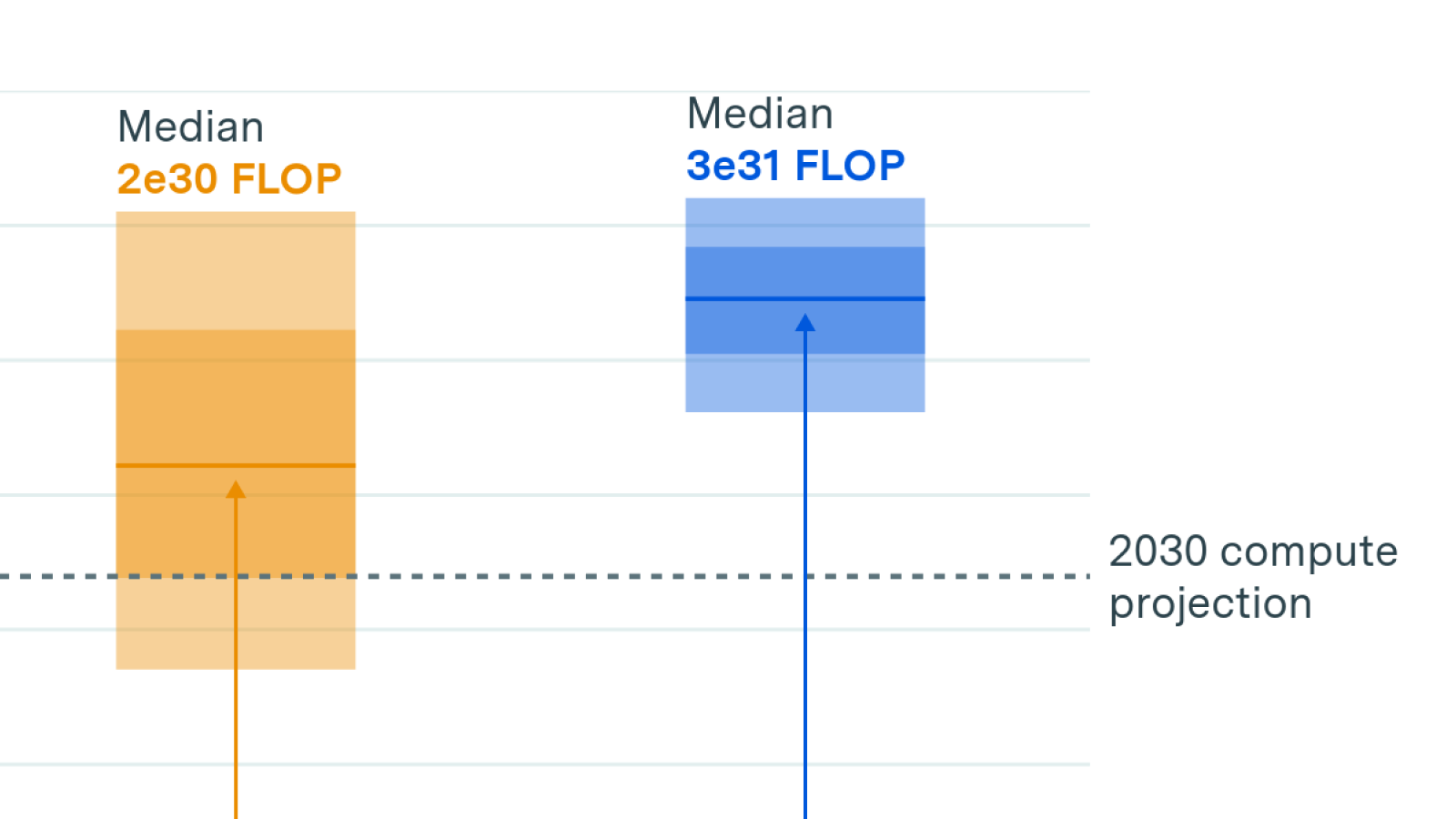
We investigate the scalability of AI training runs. We identify electric power, chip manufacturing, data and latency as constraints. We conclude that 2e29 FLOP training runs will likely be feasible by 2030.

By Jaime Sevilla, Tamay Besiroglu, Ben Cottier, Josh You, Edu Roldán, Pablo Villalobos, and Ege Erdil

The length of time spent training notable models is growing
Data Insight
Aug. 16, 2024
The length of time spent training notable models is growing

By Luke Emberson

Training compute has scaled up faster for language than vision
Data Insight
Jun. 19, 2024
Training compute has scaled up faster for language than vision

By Robi Rahman and David Owen

The training compute of notable AI models has been doubling roughly every six months
Data Insight
Jun. 19, 2024
The training compute of notable AI models has been doubling roughly every six months

By Robi Rahman and David Owen

Training compute costs are doubling every eight months for the largest AI models
Data Insight
Jun. 19, 2024
Training compute costs are doubling every eight months for the largest AI models

By Ben Cottier and Robi Rahman

The size of datasets used to train language models doubles approximately every six months
Data Insight
Jun. 19, 2024
The size of datasets used to train language models doubles approximately every six months

By Robi Rahman and David Owen

Almost half of large-scale models have published, downloadable weights
Data Insight
Jun. 19, 2024
Almost half of large-scale models have published, downloadable weights

By Ben Cottier, Josh You, and Natalia Martemianova

Language models compose the large majority of large-scale AI models
Data Insight
Jun. 19, 2024
Language models compose the large majority of large-scale AI models

By Robi Rahman and Josh You

The pace of large-scale model releases is accelerating
Data Insight
Jun. 19, 2024
The pace of large-scale model releases is accelerating

By Robi Rahman

Will we run out of data? Limits of LLM scaling based on human-generated data
Paper
Jun. 6, 2024
Will we run out of data? Limits of LLM scaling based on human-generated data

We estimate the effective stock of quality and repetition adjusted human-generated public text for AI training at around 300 trillion tokens. If trends continue, language models will fully utilize this stock between 2026 and 2032, or even earlier if intensely overtrained.

By Pablo Villalobos, Anson Ho, Jaime Sevilla, Tamay Besiroglu, Lennart Heim, and Marius Hobbhahn

How much does it cost to train frontier AI models?
Paper
Jun. 3, 2024
How much does it cost to train frontier AI models?

The cost of training frontier AI models has grown by a factor of 2 to 3x per year for the past eight years, suggesting that the largest models will cost over a billion dollars by 2027.

By Ben Cottier, Robi Rahman, Loredana Fattorini, Nestor Maslej, and David Owen

Training compute of frontier AI models grows by 4-5x per year
Report
May 28, 2024
Training compute of frontier AI models grows by 4-5x per year

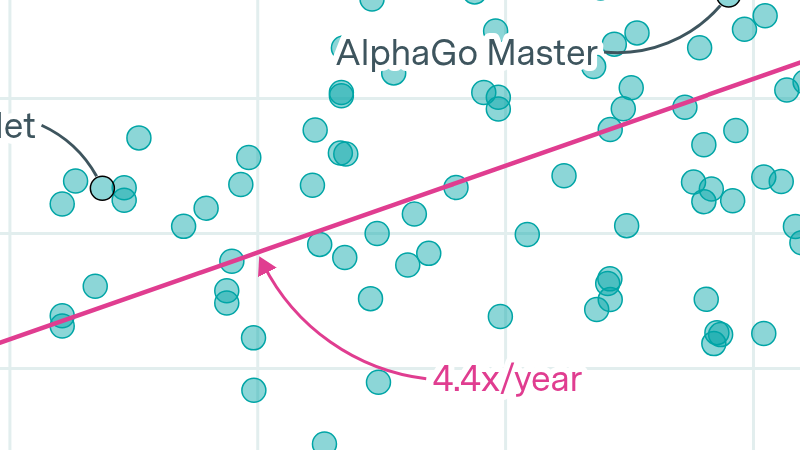
Our expanded AI model database shows that the compute used to train recent models grew 4-5x yearly from 2010 to May 2024. We find similar growth in frontier models, recent large language models, and models from leading companies.

By Jaime Sevilla and Edu Roldán

Chinchilla scaling: A replication attempt
Paper
Apr. 17, 2024
Chinchilla scaling: A replication attempt

We replicate Hoffmann et al.’s estimation of a parametric scaling law and find issues with their estimates. Our estimates fit the data better and align with Hoffmann’s other approaches.

By Tamay Besiroglu, Ege Erdil, Matthew Barnett, and Josh You

Tracking large-scale AI models
Report
Apr. 5, 2024
Tracking large-scale AI models

We present a dataset of 81 large-scale models, from AlphaGo to Gemini, developed across 18 countries, at the leading edge of scale and capabilities.

By Robi Rahman, David Owen, and Josh You

Optimally allocating compute between inference and training
Report
Mar. 29, 2024
Optimally allocating compute between inference and training

Our analysis indicates that AI labs should spend comparable resources on training and running inference, assuming they can flexibly balance compute between these tasks to maintain model performance.

By Ege Erdil

Biological sequence models in the context of the AI directives
Report
Jan. 17, 2024
Biological sequence models in the context of the AI directives

The expanded Epoch database now includes biological sequence models, revealing potential regulatory gaps in the White House’s Executive Order on AI and the growth of the compute used in their training.

By Nicole Maug, Aidan O'Gara, and Tamay Besiroglu

Trends in machine learning hardware
Report
Nov. 9, 2023
Trends in machine learning hardware

FLOP/s performance in 47 ML hardware accelerators doubled every 2.3 years. Switching from FP32 to tensor-FP16 led to a further 10x performance increase. Memory capacity and bandwidth doubled every 4 years.

By Marius Hobbhahn, Lennart Heim, and Gökçe Aydos

Announcing Epoch AI's updated parameter, compute and data trends database
Update
Oct. 23, 2023
Announcing Epoch AI's updated parameter, compute and data trends database

Our expanded database, which tracks the parameters, datasets, training compute, and other details of notable machine learning systems, now spans over 700 notable machine learning models.

By The Epoch AI Team

Explosive growth from AI: A review of the arguments
Paper
Sep. 23, 2023
Explosive growth from AI: A review of the arguments

Our new article examines why we might (or might not) expect growth on the order of ten-fold the growth rates common in today’s frontier economies once advanced AI systems are widely deployed.

By Ege Erdil and Tamay Besiroglu

Trading off compute in training and inference
Report
Jul. 28, 2023
Trading off compute in training and inference

We explore several techniques that induce a tradeoff between spending more resources on training or on inference and characterize the properties of this tradeoff. We outline some implications for AI governance.

By Pablo Villalobos and David Atkinson

The limited benefit of recycling foundation models
Report
Jul. 7, 2023
The limited benefit of recycling foundation models

While reusing pretrained models often saves training costs on large training runs, it is unlikely that model recycling will result in more than a modest increase in AI capabilities.

By Matthew Barnett

How predictable is language model benchmark performance?
Paper
Jun. 9, 2023
How predictable is language model benchmark performance?

We investigate large language model performance across five orders of magnitude of compute scaling, finding that compute-focused extrapolations are a promising way to forecast AI capabilities.

By David Owen

A compute-based framework for thinking about the future of AI
Viewpoint
May 31, 2023
A compute-based framework for thinking about the future of AI

AI’s potential to automate labor is likely to alter the course of human history within decades, with the availability of compute being the most important factor driving rapid progress in AI capabilities.

By Matthew Barnett

Please report your compute
Viewpoint
Apr. 26, 2023
Please report your compute

Compute is essential for AI performance, but researchers often fail to report it. Adopting reporting norms would support research, enhance forecasts of AI’s impacts and developments, and assist policymakers.

By Jaime Sevilla, Anson Ho, and Tamay Besiroglu

The Direct Approach
Report
Apr. 25, 2023
The Direct Approach

Empirical scaling laws can help predict the cross-entropy loss associated with training inputs, such as compute and data. However, in order to predict when AI will achieve some subjective level of performance, it is necessary to devise a way of interpreting the cross-entropy loss of a model. This blog post provides a discussion of one such theoretical method, which we call the Direct Approach.

By Matthew Barnett and Tamay Besiroglu

Trends in the dollar training cost of machine learning systems
Report
Jan. 31, 2023
Trends in the dollar training cost of machine learning systems

I combine training compute and GPU price-performance data to estimate the cost of compute in US dollars for the final training run of 124 machine learning systems published between 2009 and 2022, and find that the cost has grown by approximately 0.5 orders of magnitude per year.

By Ben Cottier

Scaling laws literature review
Report
Jan. 26, 2023
Scaling laws literature review

I have collected a database of scaling laws for different tasks and architectures, and reviewed dozens of papers in the scaling law literature.

By Pablo Villalobos

An interactive model of AI takeoff speeds
Update
Jan. 24, 2023
An interactive model of AI takeoff speeds

We have developed an interactive website showcasing a new model of AI takeoff speeds.

By Jaime Sevilla and Edu Roldán

Literature review of transformative artificial intelligence timelines
Report
Jan. 17, 2023
Literature review of transformative artificial intelligence timelines

We summarize and compare several models and forecasts predicting when transformative AI will be developed.

By Keith Wynroe, David Atkinson, and Jaime Sevilla

Will we run out of ML data? Evidence from projecting dataset size trends
Paper
Nov. 10, 2022
Will we run out of ML data? Evidence from projecting dataset size trends

Based on our previous analysis of trends in dataset size, we project the growth of dataset size in the language and vision domains. We explore the limits of this trend by estimating the total stock of available unlabeled data over the next decades.

By Pablo Villalobos, Jaime Sevilla, Lennart Heim, Tamay Besiroglu, Marius Hobbhahn, and Anson Ho

Trends in training dataset sizes
Report
Sep. 20, 2022
Trends in training dataset sizes

We collected a database of notable ML models and their training dataset sizes. We use this database to find historical growth trends in dataset size for different domains, particularly language and vision.

By Pablo Villalobos and Anson Ho

The longest training run
Report
Aug. 17, 2022
The longest training run

Training runs of large machine learning systems are likely to last less than 14-15 months. This is because longer runs will be outcompeted by runs that start later and therefore use better hardware and better algorithms.

By Jaime Sevilla, Tamay Besiroglu, Owen Dudney, and Anson Ho

Machine learning model sizes and the parameter gap
Paper
Jul. 5, 2022
Machine learning model sizes and the parameter gap

The model size of notable machine learning systems has grown ten times faster than before since 2018. After 2020 growth has not been entirely continuous: there was a jump of one order of magnitude which persists until today. This is relevant for forecasting model size and thus AI capabilities.

By Pablo Villalobos, Jaime Sevilla, Tamay Besiroglu, Lennart Heim, Anson Ho, and Marius Hobbhahn

Grokking “Semi-informative priors over AI timelines”
Report
Jun. 13, 2022
Grokking “Semi-informative priors over AI timelines”

I give visual explanations for Tom Davidson’s report, Semi-informative priors over AI timelines, and summarise the key assumptions and intuitions

By Anson Ho

Grokking “Forecasting TAI with biological anchors”
Report
Jun. 6, 2022
Grokking “Forecasting TAI with biological anchors”

I give a visual explanation of Ajeya Cotra’s draft report, Forecasting TAI with biological anchors, summarising the key assumptions, intuitions, and conclusions.

By Anson Ho

Projecting compute trends in machine learning
Report
Mar. 7, 2022
Projecting compute trends in machine learning

Projecting forward 70 years' worth of trends in the amount of compute used to train machine learning models.

By Tamay Besiroglu, Lennart Heim, and Jaime Sevilla

Compute trends across three eras of machine learning
Paper
Updated May 2, 2022
Compute trends across three eras of machine learning

We’ve compiled a dataset of the training compute for over 120 machine learning models, highlighting novel trends and insights into the development of AI since 1952, and what to expect going forward."

By Jaime Sevilla, Lennart Heim, Anson Ho, Tamay Besiroglu, Marius Hobbhahn, and Pablo Villalobos

Estimating training compute of deep learning models
Report
Jan. 20, 2022
Estimating training compute of deep learning models

We describe two approaches for estimating the training compute of Deep Learning systems, by counting operations and looking at GPU time.

By Jaime Sevilla, Lennart Heim, Marius Hobbhahn, Tamay Besiroglu, Anson Ho, and Pablo Villalobos

How to measure FLOP for neural networks empirically?
Report
Nov. 29, 2021
How to measure FLOP for neural networks empirically?

Computing the utilization rate for multiple Neural Network architectures.

By Marius Hobbhahn

Parameter counts in machine learning
Report
Jun. 19, 2021
Parameter counts in machine learning

Compiling a large dataset of machine learning models to determine changes in the parameters counts of systems since 1952.

By Jaime Sevilla, Pablo Villalobos, and Juan Felipe Cerón