Open-weight models

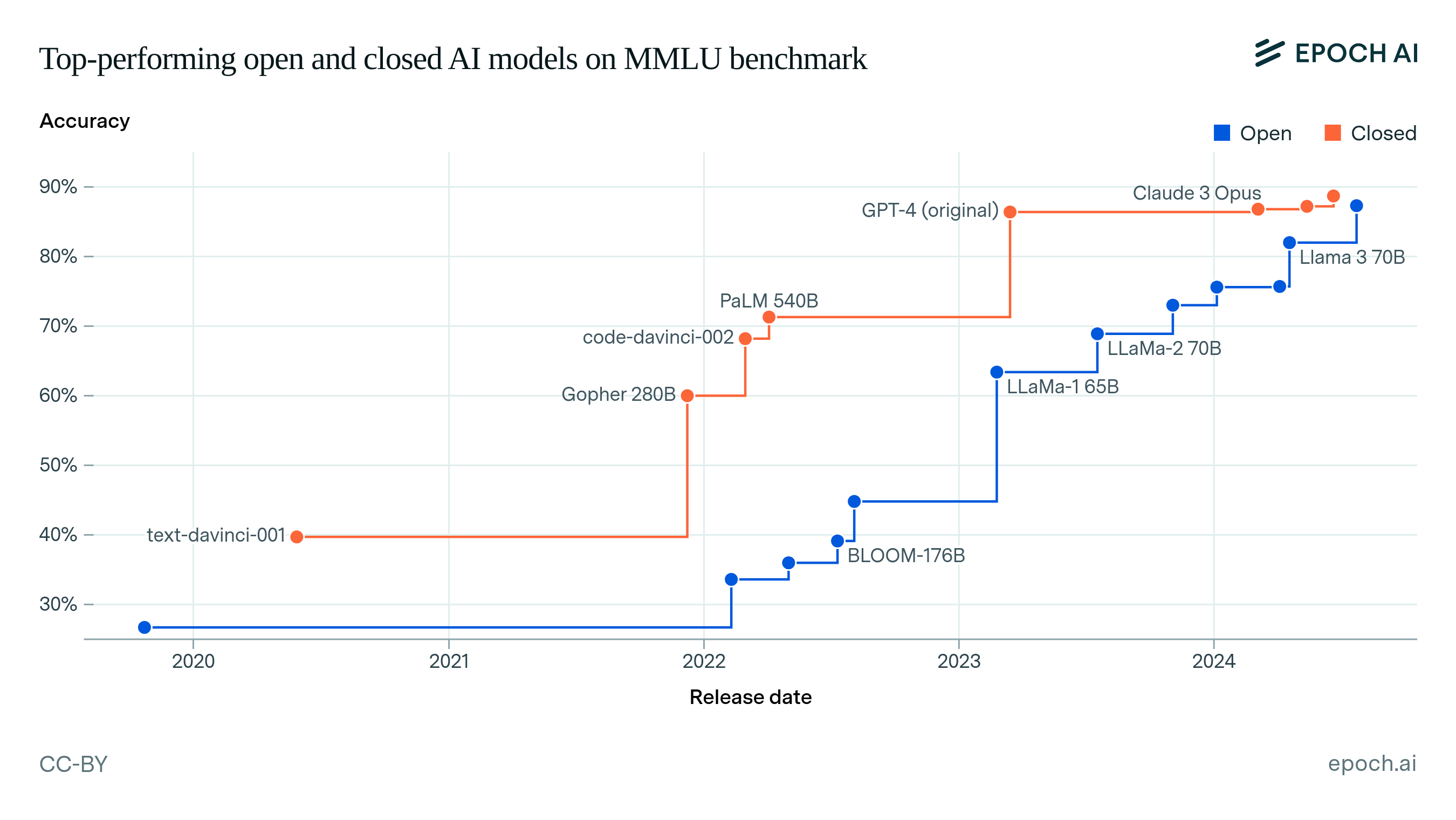
Some of the most powerful AI systems in the world are available for anyone to download, run, and build on. Others remain fully proprietary. These open models, which include open-weight releases where a model's core parameters are made public, are getting closer to matching the most capable proprietary systems. Epoch tracks how far behind open models are, how fast the gap is closing, and how quickly frontier AI capabilities become widely accessible.

Filter

Type
AI can turn security fixes into working exploits before users receive an update
Report
Oct. 29, 2026
AI can turn security fixes into working exploits before users receive an update

GLM 5.3 turned published-but-unshipped Firefox security fixes into working one-click exploits for six releases, at roughly $1,000 each.
By Aiden Ament, Yafah Edelman, Alexander Barry, Timothée Chauvin, Lee Bousfield, and Jaeho Lee

Open-weight models trail closed models in cyber capabilities by 6–7 months
Data Insight
Oct. 16, 2026
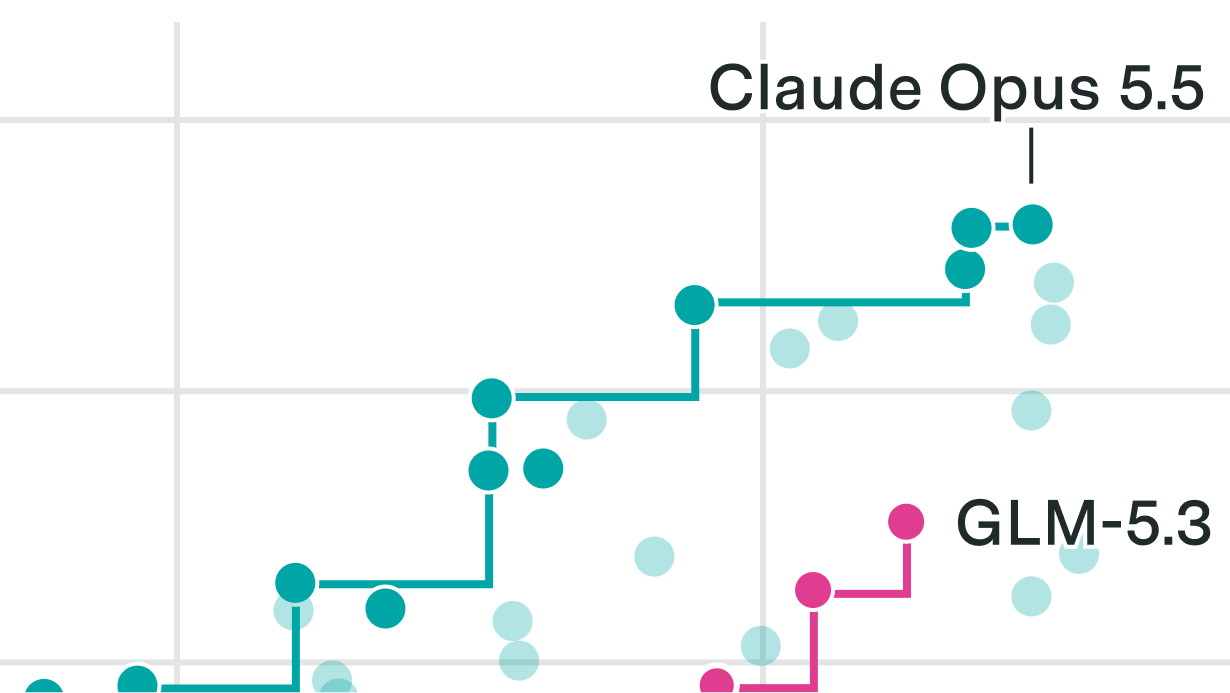
Open-weight models trail closed models in cyber capabilities by 6–7 months

Z.ai’s GLM-5.3 is the top open-weight model on Epoch’s Cyber ECI, scoring where the closed-weight frontier stood 6–7 months earlier.
By Jaeho Lee and Alexander Barry

AI has improved significantly at reasoning about IKEA furniture assembly
Report
Sep. 23, 2026
AI has improved significantly at reasoning about IKEA furniture assembly

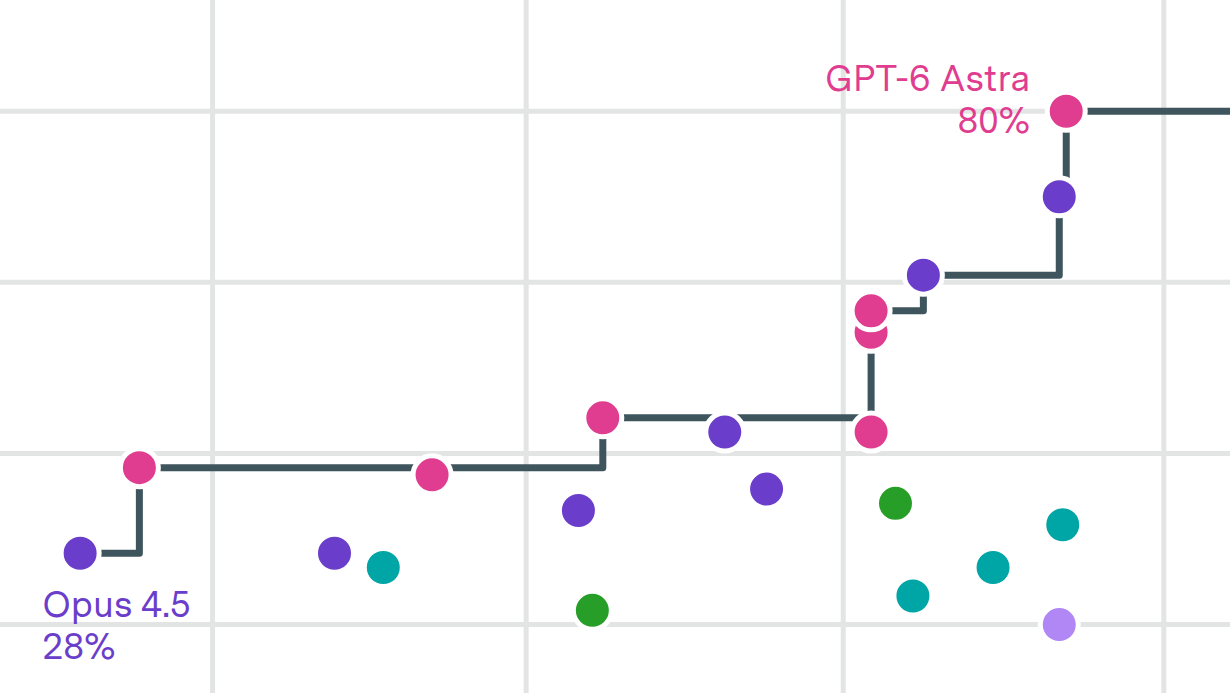
AI model scores on Epoch AI's IKEA furniture assembly benchmark jumped from 28% to 80% in 10 months, with open-weight models trailing closed-weight models by about 7 months. Epoch AI's test of visual and spatial reasoning across 60 photos from three furniture builds.

By Aiden Ament and Greg Burnham

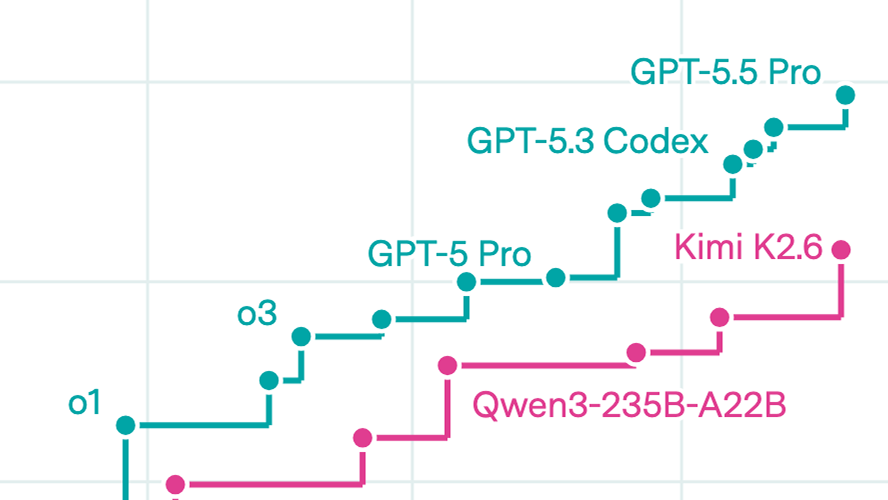
Open models lag state-of-the-art closed models by 4 months
Data Insight
May 29, 2026
Open models lag state-of-the-art closed models by 4 months

Since January 2026, the most capable open-weight models have lagged frontier closed models by an average of four months, or 8 ECI points.
By Jack Edwards and Luke Emberson

Keeping up with the GPTs
Newsletter
Apr. 7, 2026
Keeping up with the GPTs

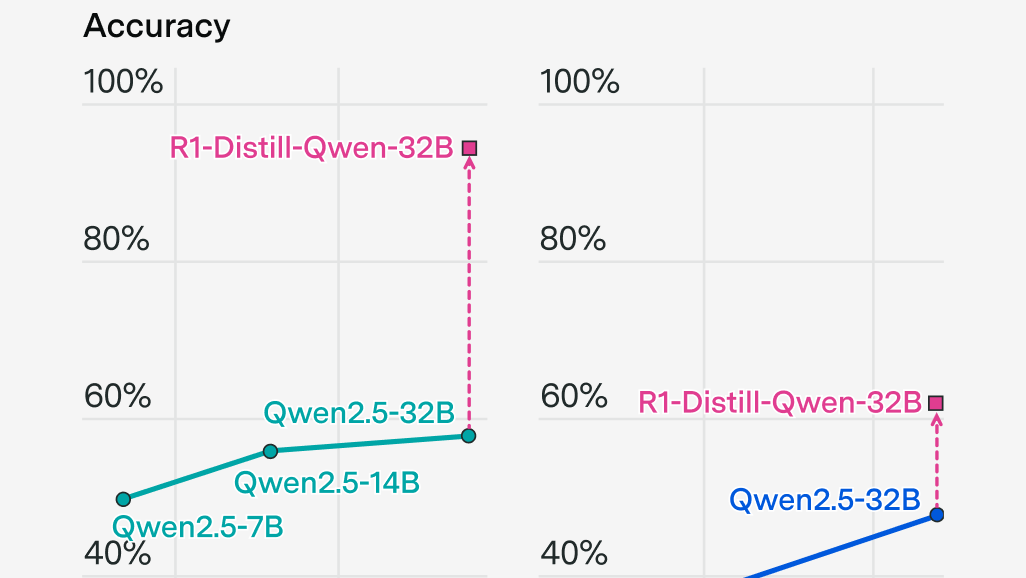
Can Chinese and open model companies compete with the frontier through e.g. distillation and talent?
By Anson Ho

Open-weight models lag state-of-the-art by around 3 months on average
Data Insight
Oct. 30, 2025
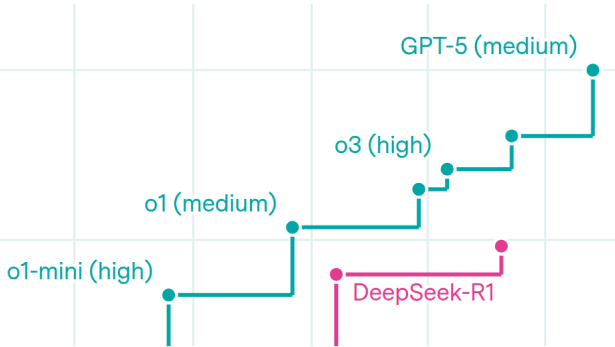
Open-weight models lag state-of-the-art by around 3 months on average

By Luke Emberson

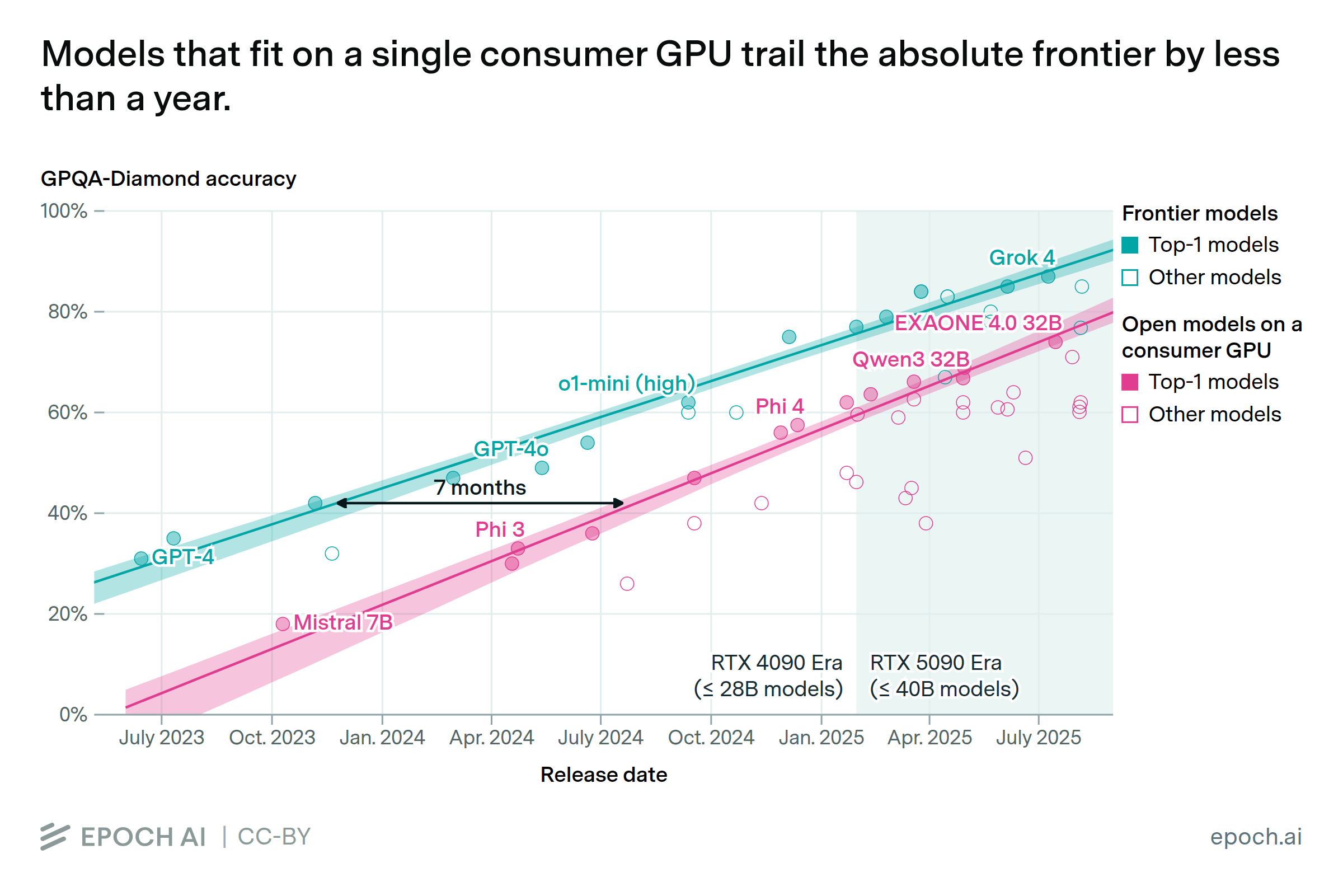
Frontier AI performance becomes accessible on consumer hardware within a year
Data Insight
Aug. 15, 2025
Frontier AI performance becomes accessible on consumer hardware within a year

Models that fit on consumer GPUs match the performance of frontier AI within a year or less.
By Venkat Somala and Luke Emberson

Training open-weight models is becoming more data intensive
Data Insight
Aug. 1, 2025
Training open-weight models is becoming more data intensive

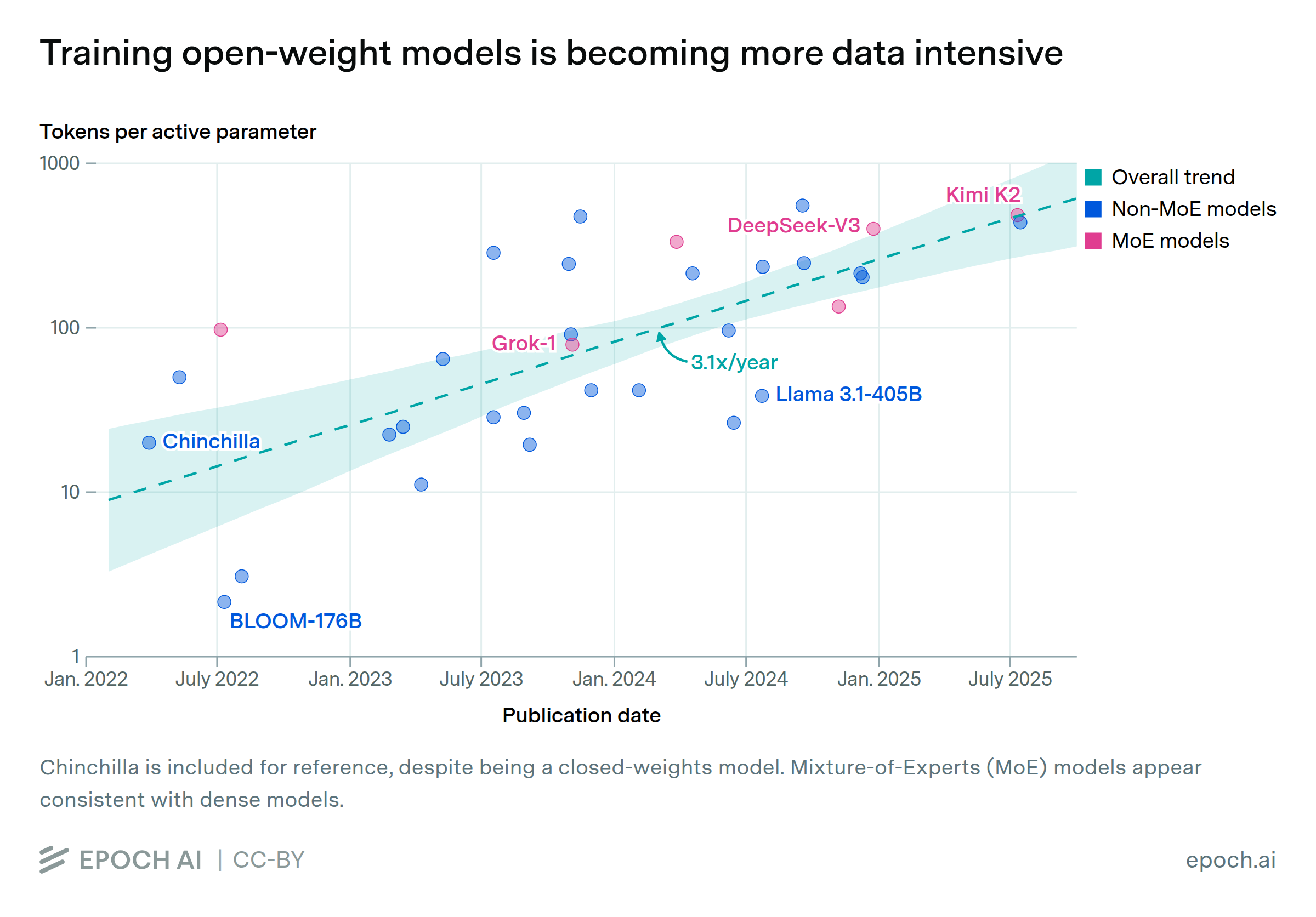
The ratio of training data to active parameters in open-weight LLMs has grown 3.1x per year since 2022. Recent models LLMs have been trained with 20 times more data per parameter than the optimal ratio suggested by the 2022 Chinchilla scaling laws.
By Venkat Somala and Yafah Edelman

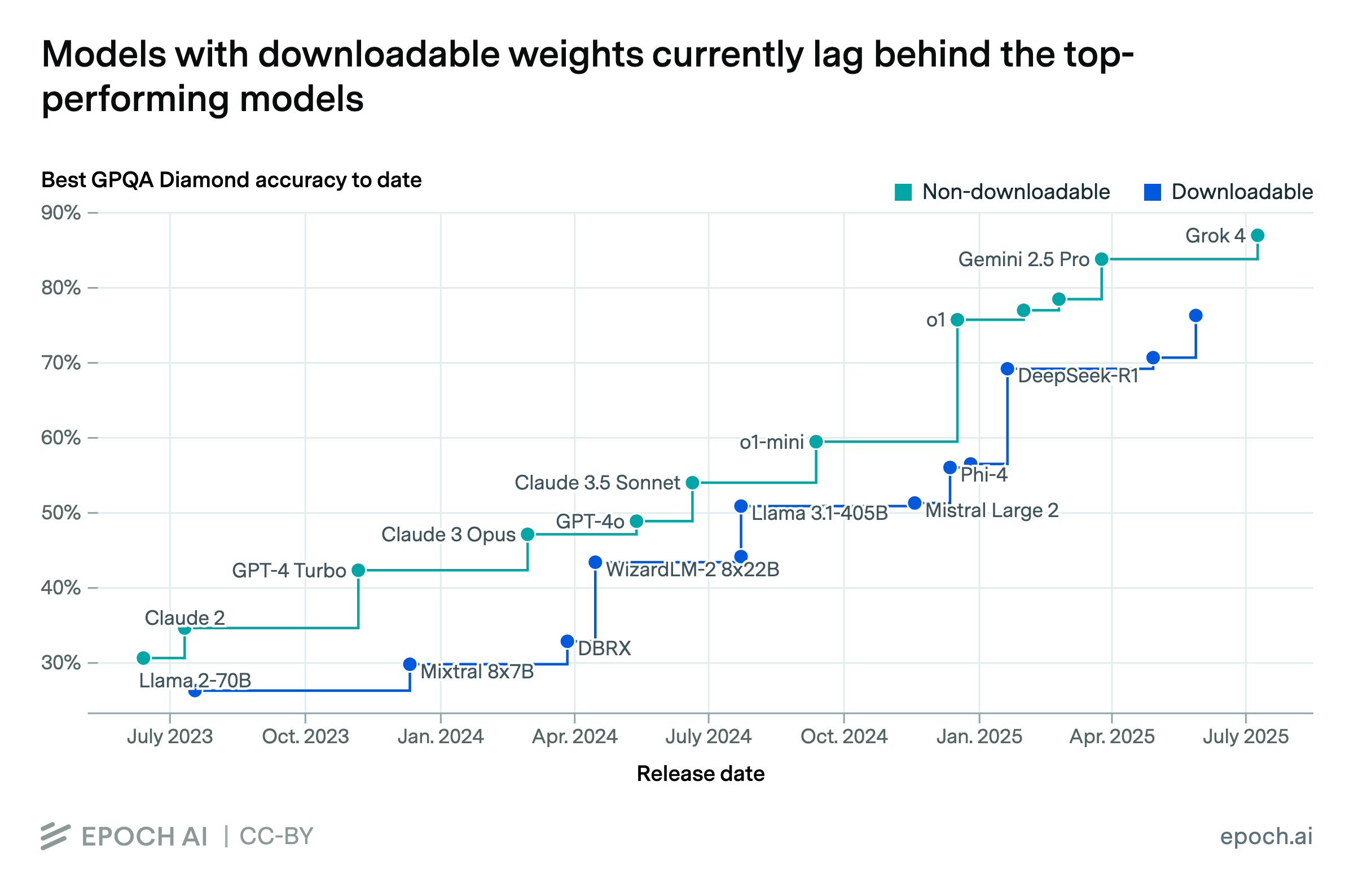
Models with downloadable weights currently lag behind the top-performing models
Data Insight
Updated Feb. 7, 2025
Models with downloadable weights currently lag behind the top-performing models

By Jean-Stanislas Denain

What went into training DeepSeek-R1?
Newsletter
Jan. 31, 2025
What went into training DeepSeek-R1?

This Gradient Updates issue explores DeepSeek-R1's architecture, training cost, and pricing, showing how it rivals OpenAI's o1 at 30x lower cost.

By Ege Erdil