Featured

Data
Updated Oct. 27, 2026
Paper
Nov. 27, 2023
Newsletter
Jan. 28, 2026
A handful of companies and research labs are responsible for building the most powerful AI systems in the world. Who they are, what they are building, and how they compare is changing fast. Epoch maintains databases and conducts analysis tracking the leading AI labs, their major model releases, compute resources, and workforce, providing a data-driven view of who is shaping the frontier of AI.

Daily archive of Anthropic's and OpenAI's job postings.
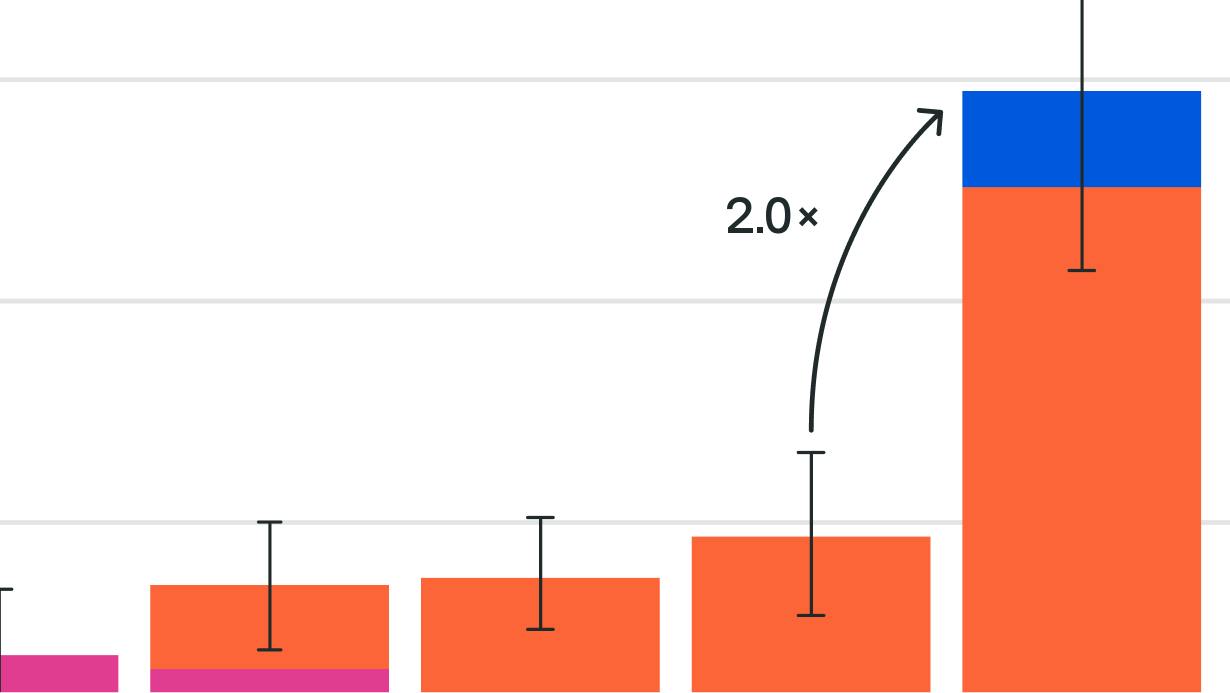
Broadcom’s shipments of TPU by unit volume increased by about 65% quarter over quarter to roughly 800,000 chips, while compute output doubled, driven by a shift to more powerful chips.
Our database of AI company data, with data on revenue, funding, staff, and compute for many of the key players in frontier AI.
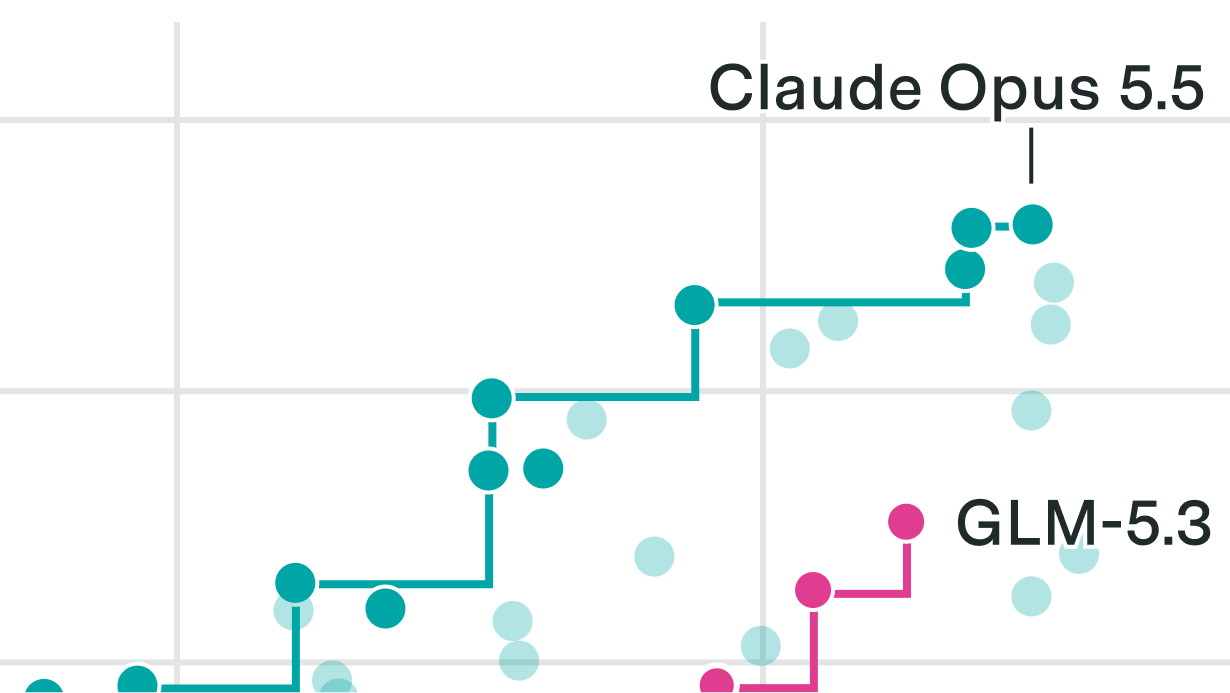
Z.ai’s GLM-5.3 is the top open-weight model on Epoch’s Cyber ECI, scoring where the closed-weight frontier stood 6–7 months earlier.
Our estimates of how much computing power the leading AI developers rent or use, measured in Nvidia H100-equivalents (H100e).
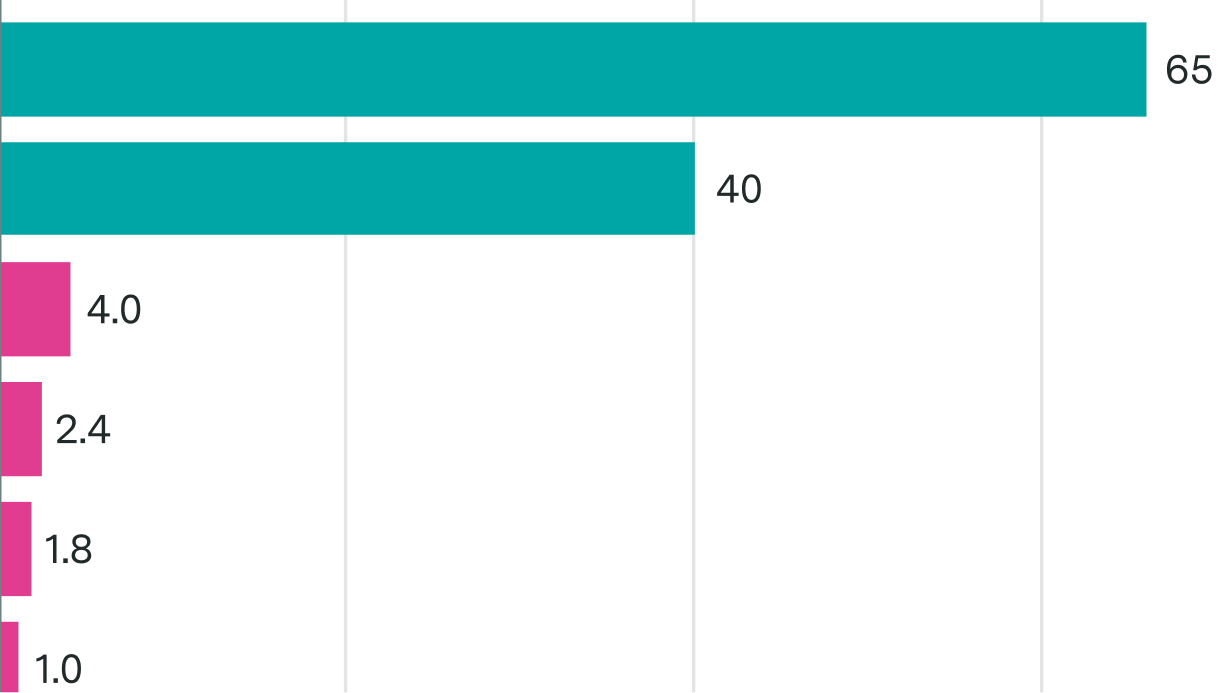
China's six leading AI firms earn about 10% of OpenAI and Anthropic's combined AI revenue. Epoch AI examines their five revenue streams: consumer apps, model access, enterprise and government solutions, licensing fees, and indirect monetization through cloud and advertising.
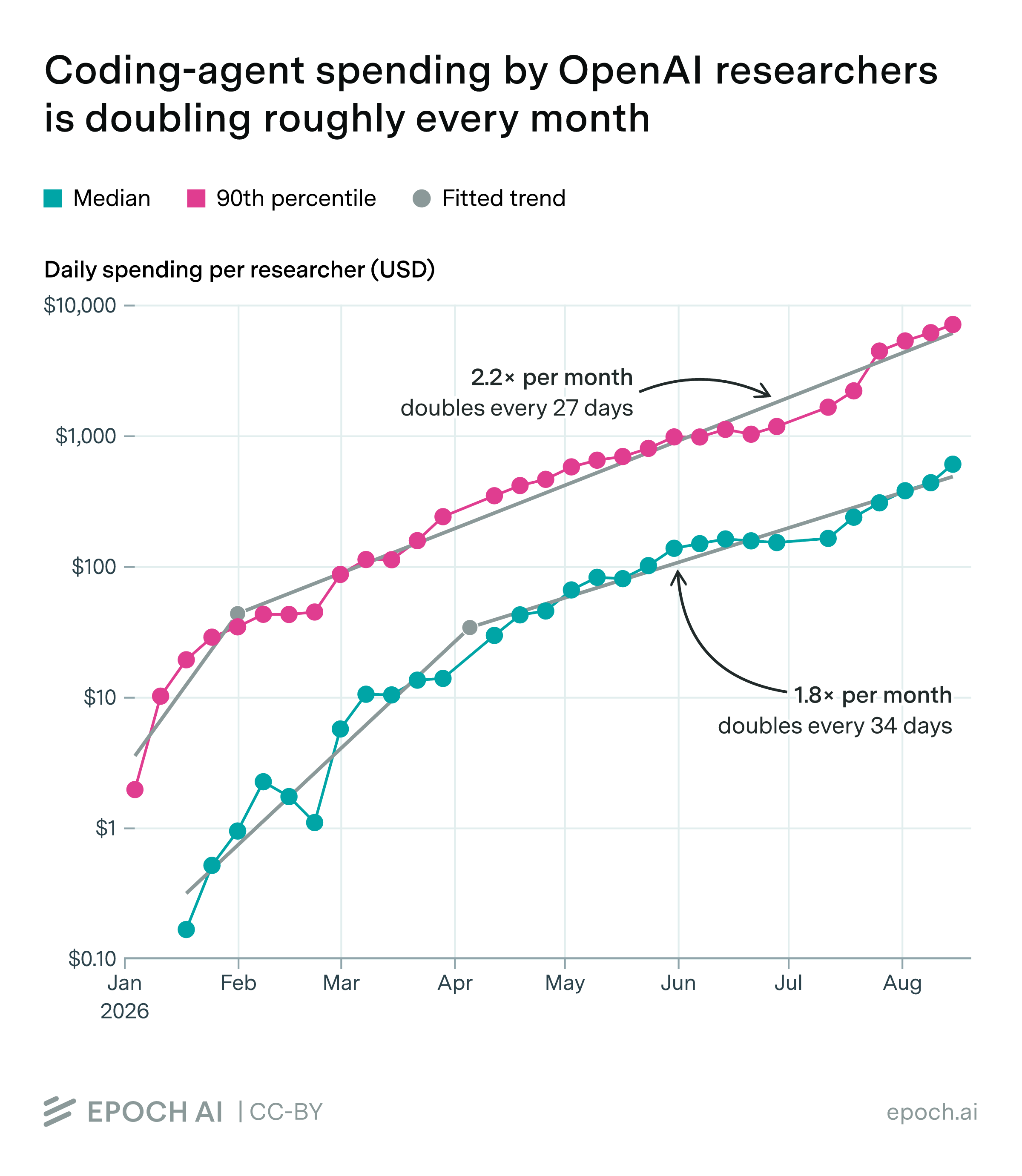
OpenAI researchers’ coding-agent usage, valued at API prices, has recently been doubling roughly every month, according to breakpoint fits.

A first look at Epoch AI's data on compute usage across five leading labs.
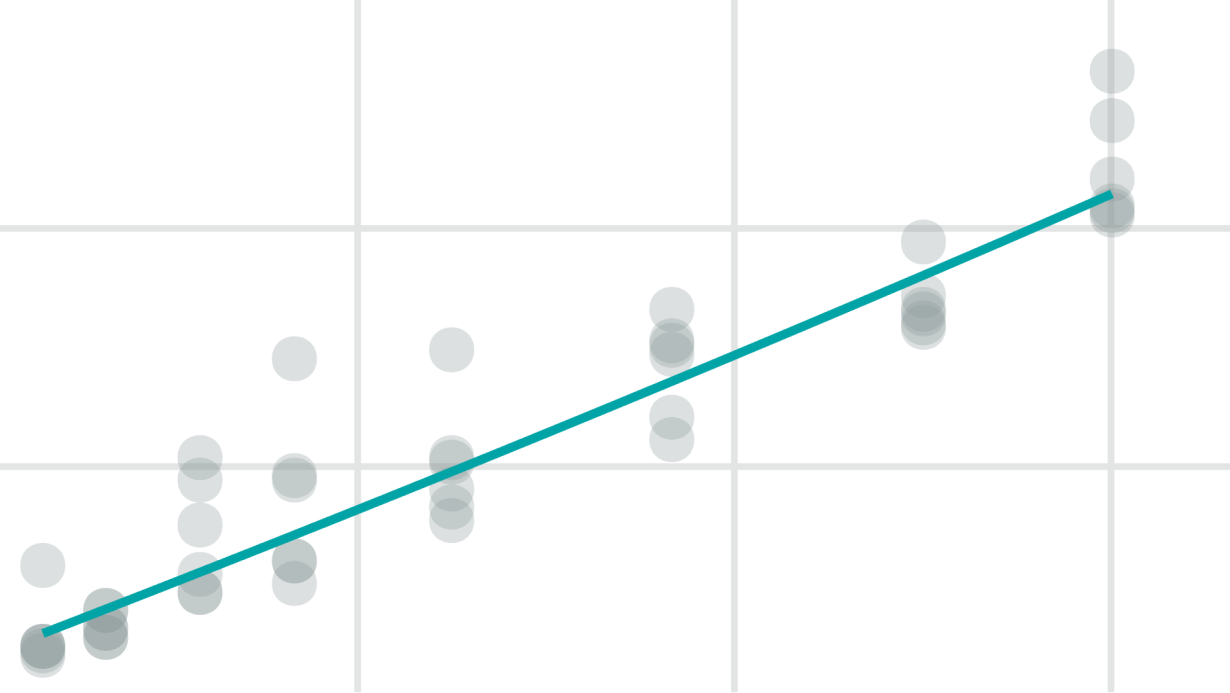
Epoch AI measures long-context latency scaling across four frontier models. GPT-5.6 Terra and Sol show quadratic time-to-first-token growth with context length, while Claude Sonnet 5 and Opus 5 stay near-linear.
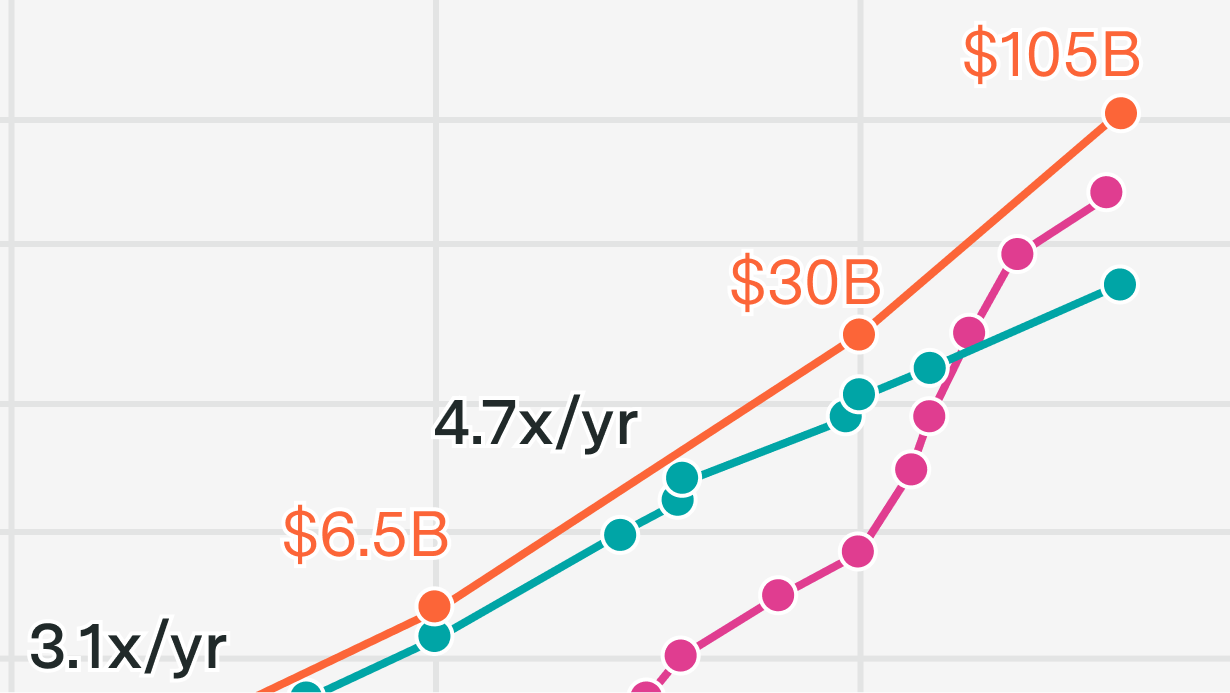
How quickly are Anthropic and OpenAI growing their revenue?