Settings
View
Display
Color by
Compute
Data
Filter by owner
Filter by user
Filter by country
Rigorous public data on the world's largest AI data centers. Independent estimates of power, AI compute, and cost built from high-resolution satellite imagery, permits, and our understanding of how data centers are constructed. Every data point is vetted by our team.
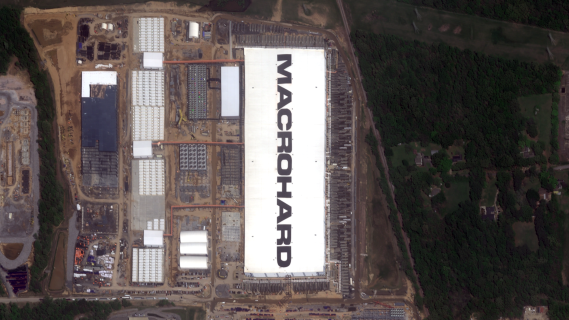
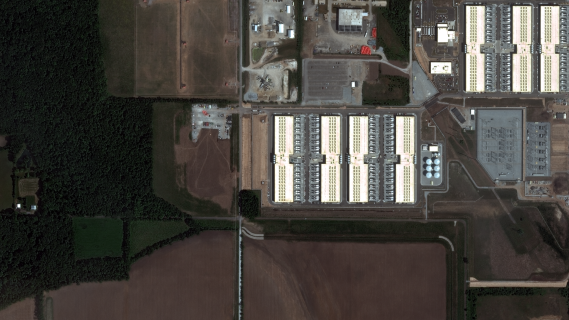
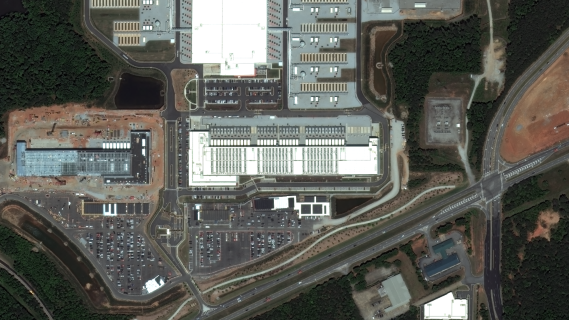
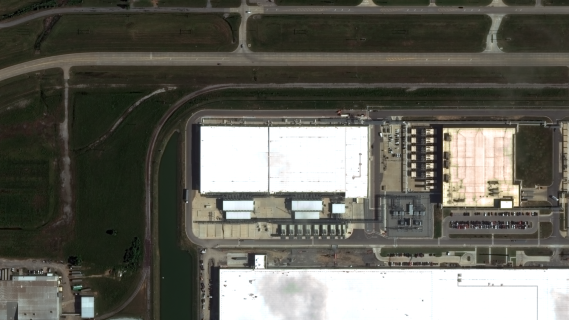
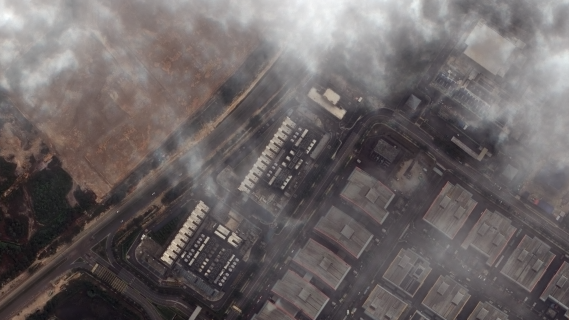
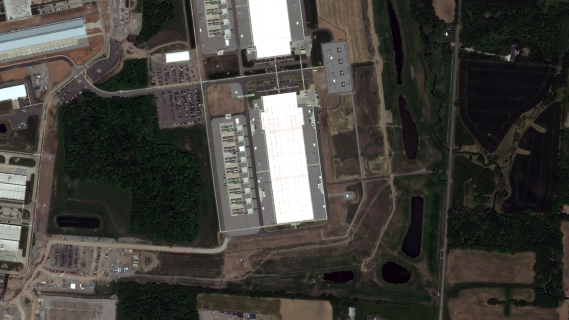
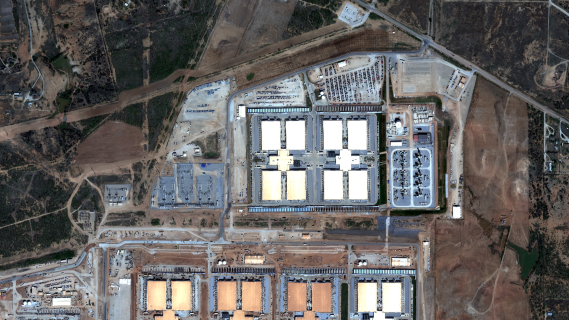
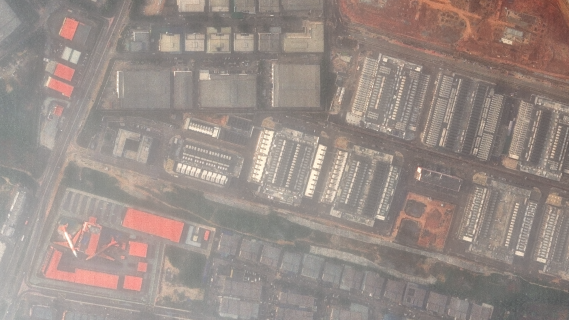
We define an AI data center as a collection of one or more buildings which are located near each other, have a shared hardware owner or facility operator, and which run hardware specialized for AI. This hardware includes GPUs or custom chips like Google's TPUs. These data centers may be used to experiment on, train, and deploy AI models.
We don't use a hard limit for how close together the data center buildings have to be, but a rule of thumb is less than 10 km apart. The buildings may or may not be networked together.
We do not distinguish between campuses of multiple buildings and individual buildings in what we classify as a data center.
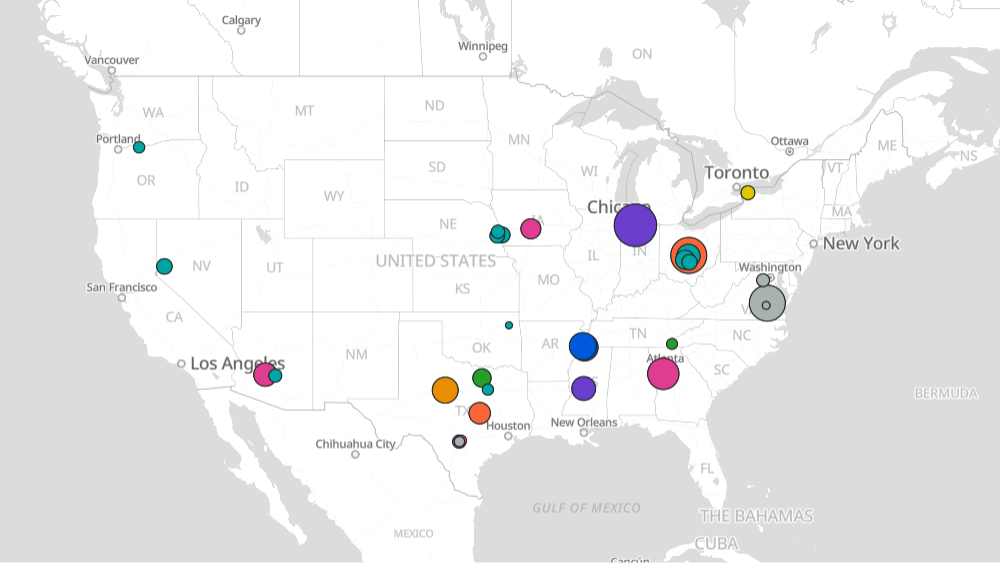
The largest known AI data center by IT power is Anthropic-Amazon New Carlisle, owned by Amazon in New Carlisle, IN, drawing 1,037 MW. It is followed by Colossus 2 (SpaceXAI, 946 MW), Microsoft Fairwater Atlanta (Microsoft, 636 MW), DayOne Nusajaya (473 MW), and Meta Prometheus (Meta, 471 MW).
The largest AI data center by compute is Colossus 2, owned by SpaceXAI in Memphis, TN, with 1,112k H100e. It is followed by Anthropic-Amazon New Carlisle (Amazon, 818k H100e), Microsoft Fairwater Atlanta (Microsoft, 769k H100e), Google Pryor (North) (Google, 637k H100e), and DayOne Nusajaya (584k H100e).
The United States has the most large-scale AI data centers, concentrated in Texas (14 sites covered), Ohio (7 sites covered), Virginia (7 sites covered), Nebraska (4 sites covered), and Iowa (4 sites covered). International facilities include DayOne Nusajaya in Johor Bahru, Malaysia and DayOne Kempas in Kempas, Malaysia. Many new sites are clustered near major power infrastructure and fiber networks in the American Midwest and South.
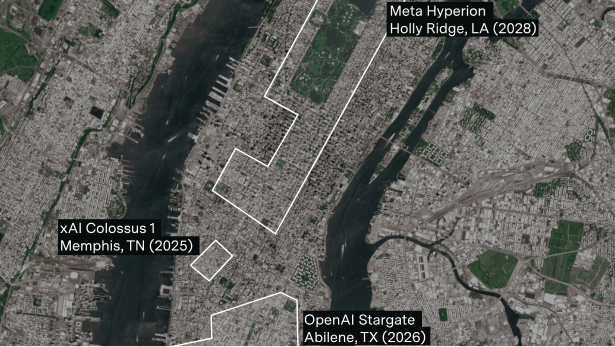
The 95 AI data centers we cover have a combined 14.2 GW of IT power capacity. Total facility power is 20-50% higher due to cooling and other infrastructure overhead, pushing the real-world footprint of these 95 sites to 18.5 GW of capacity. This is more than New York City's peak demand, at 11 GW. However, the average power consumption of these data centers is typically 60–80% of capacity, due to idle time and maintenance. Individual sites range from under 50 MW—enough to power a small city like Albany, NY—to over 1000 MW, enough to power a mid-sized city like San Diego, CA.
Major AI data centers deploy NVIDIA H100, H200, and B200 GPUs, Google TPU v5 and v6 chips, and AWS Trainium2 accelerators. Hardware varies by owner: Google uses custom TPUs, Amazon deploys Trainium, while Meta, xAI, and Microsoft primarily use NVIDIA GPUs.

Need deeper insights? Our team offers custom research and advisory services.
Book a consultation