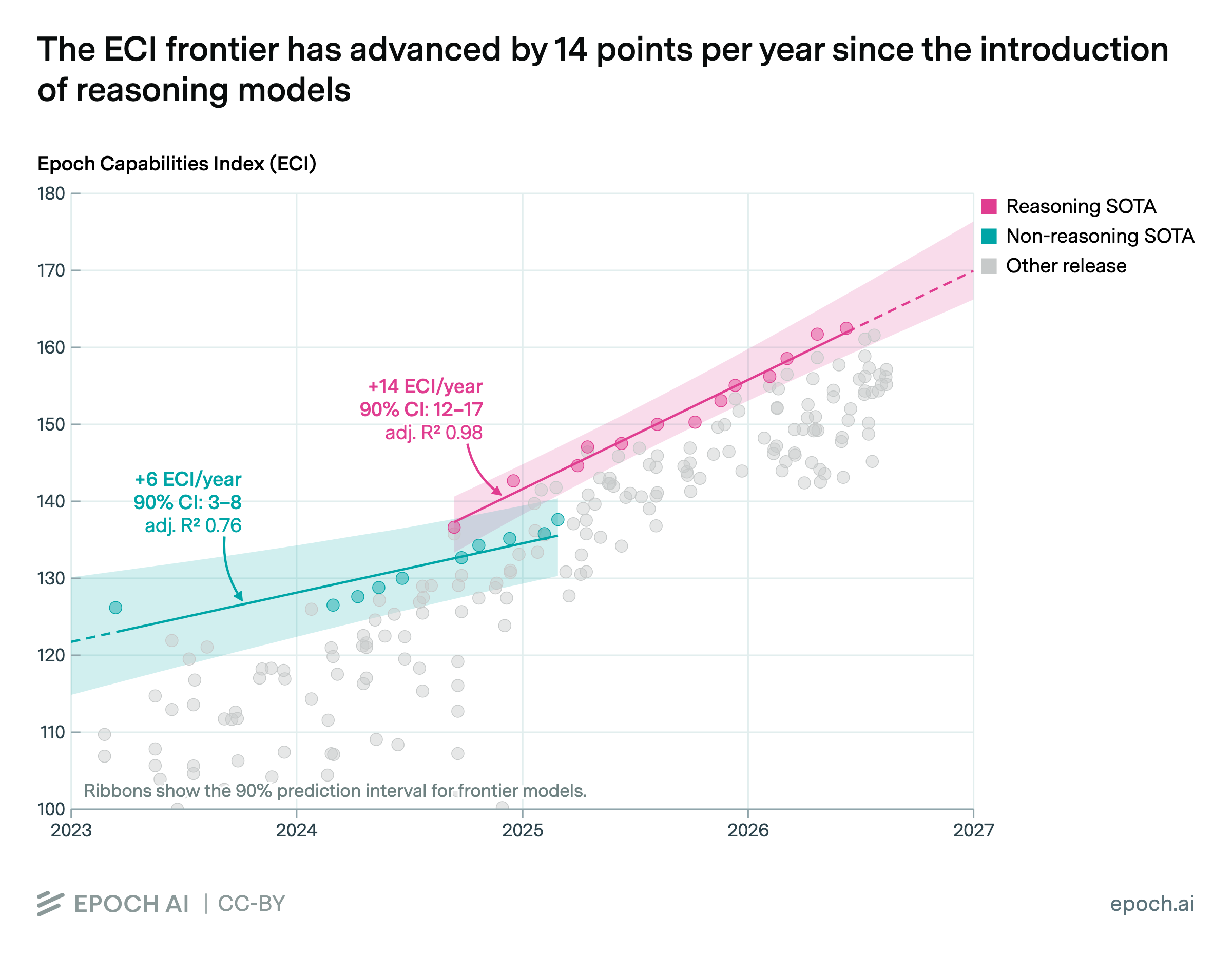
The ECI frontier has advanced by 14 points per year since the introduction of reasoning models.
The ECI frontier has advanced by 14 points per year since the introduction of reasoning models.
Following the introduction of the first reasoning models (OpenAI’s o1-mini and o1-preview) in September 2024, the Epoch Capabilities Index (ECI) frontier has advanced linearly by 14 points per year, compared with 6 points per year for non-reasoning models.
The aggregate computing power of AI chips sold each quarter is growing at a rate of 2.5×/year.

The aggregate computing power of AI chips sold each quarter is growing at a rate of 2.5×/year.
Quarterly additions of computing capacity have grown about 2.5× per year since 2024. That’s down from roughly 6× in 2023, which saw a surge in global AI training and inference capacity following the release of the initial ChatGPT and GPT-4, led by Nvidia’s new H100 GPU.
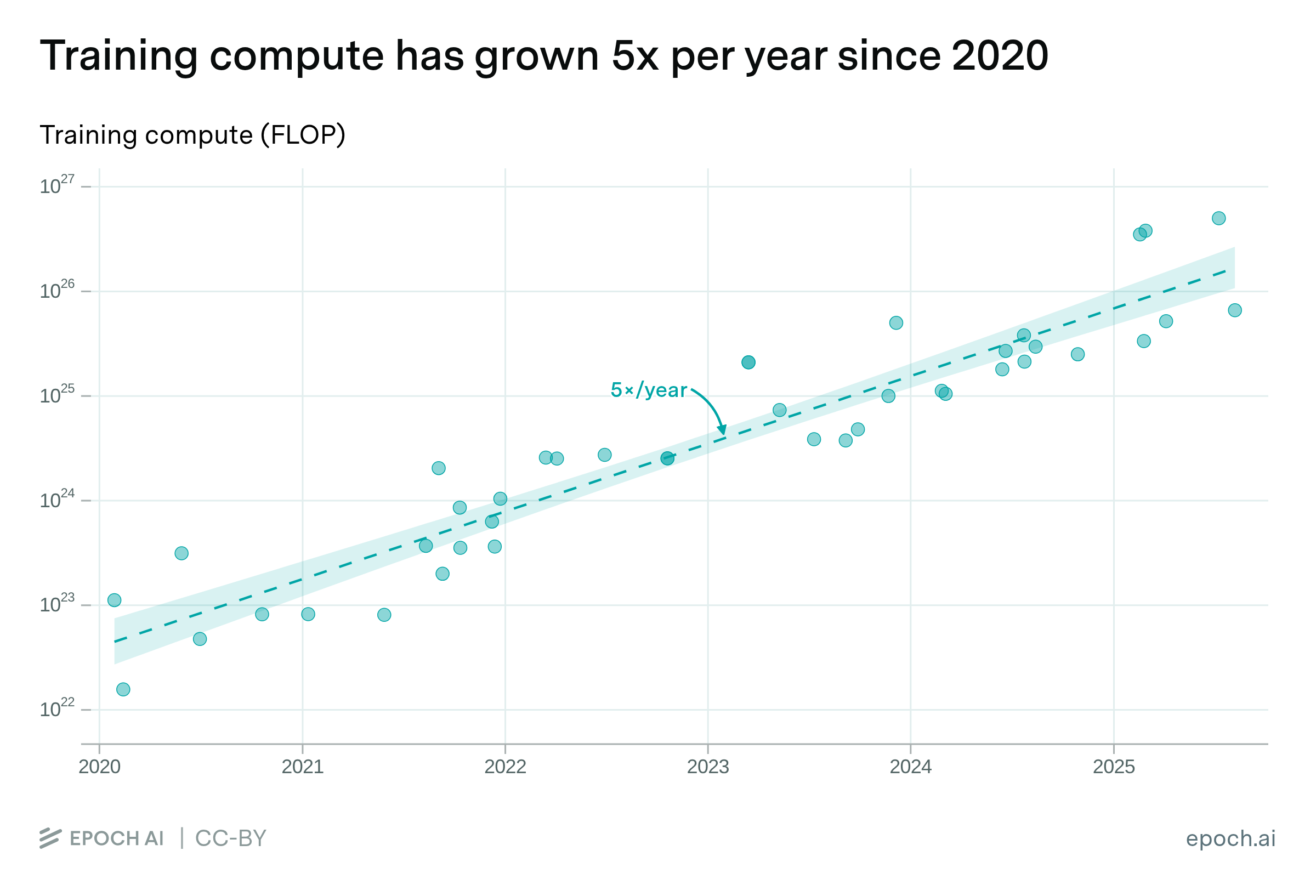
Training compute for frontier language models has been growing at 5× per year since 2020.
Training compute for frontier language models has been growing at 5× per year since 2020.
The amount of compute used to train frontier language models has grown exponentially. Since 2020, the trend among top-5 models has grown by a factor of ~10,000.
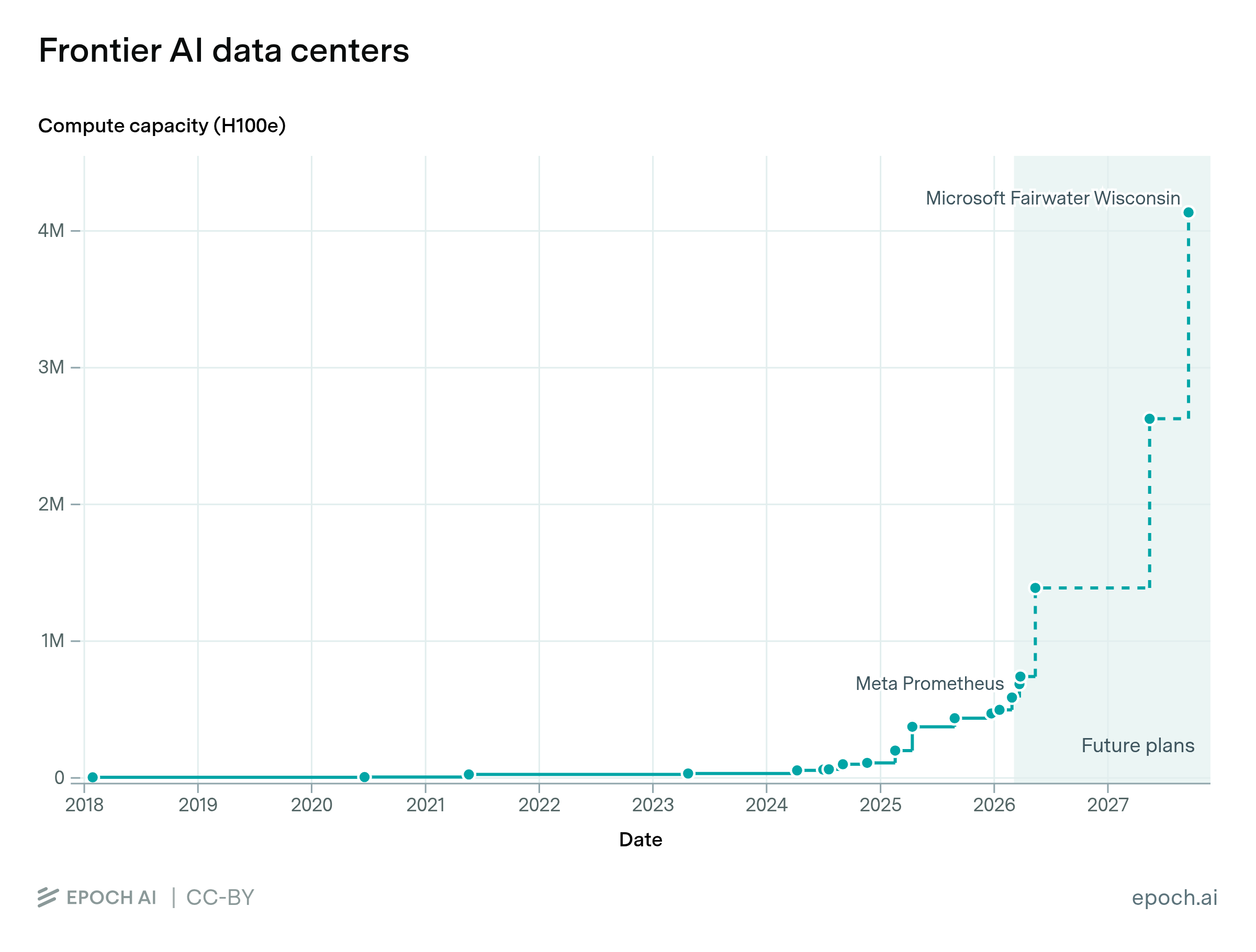
The largest known AI data center has a computing capacity equivalent to 1.1 million NVIDIA H100 chips.
The largest known AI data center has a computing capacity equivalent to 1.1 million NVIDIA H100 chips.
SpaceXAI’s Colossus 2 in Memphis, Tennessee has an estimated computing capacity of 1.1 million H100-equivalents, making it the largest known AI data center. Meta Hyperion is expected to have over 3x more computing capacity, at 3.7M H100-equivalents by January 2028.
AI chip performance per dollar has grown by 49% per year since 2023.

AI chip performance per dollar has grown by 49% per year since 2023.
Since 2023, the average dollar spent on AI chips each quarter has bought about 49% more performance each year, in constant 2025 dollars. Gains have come in spurts as spending shifts to each new chip generation — price-performance was nearly flat through mid-2024, then roughly doubled as Blackwell chips grew to a majority of new spending.